June 5, 2026 · 10 min read
Retaining Wall Cost: Springfield & Burke 2026
By Nelson at Kaeler
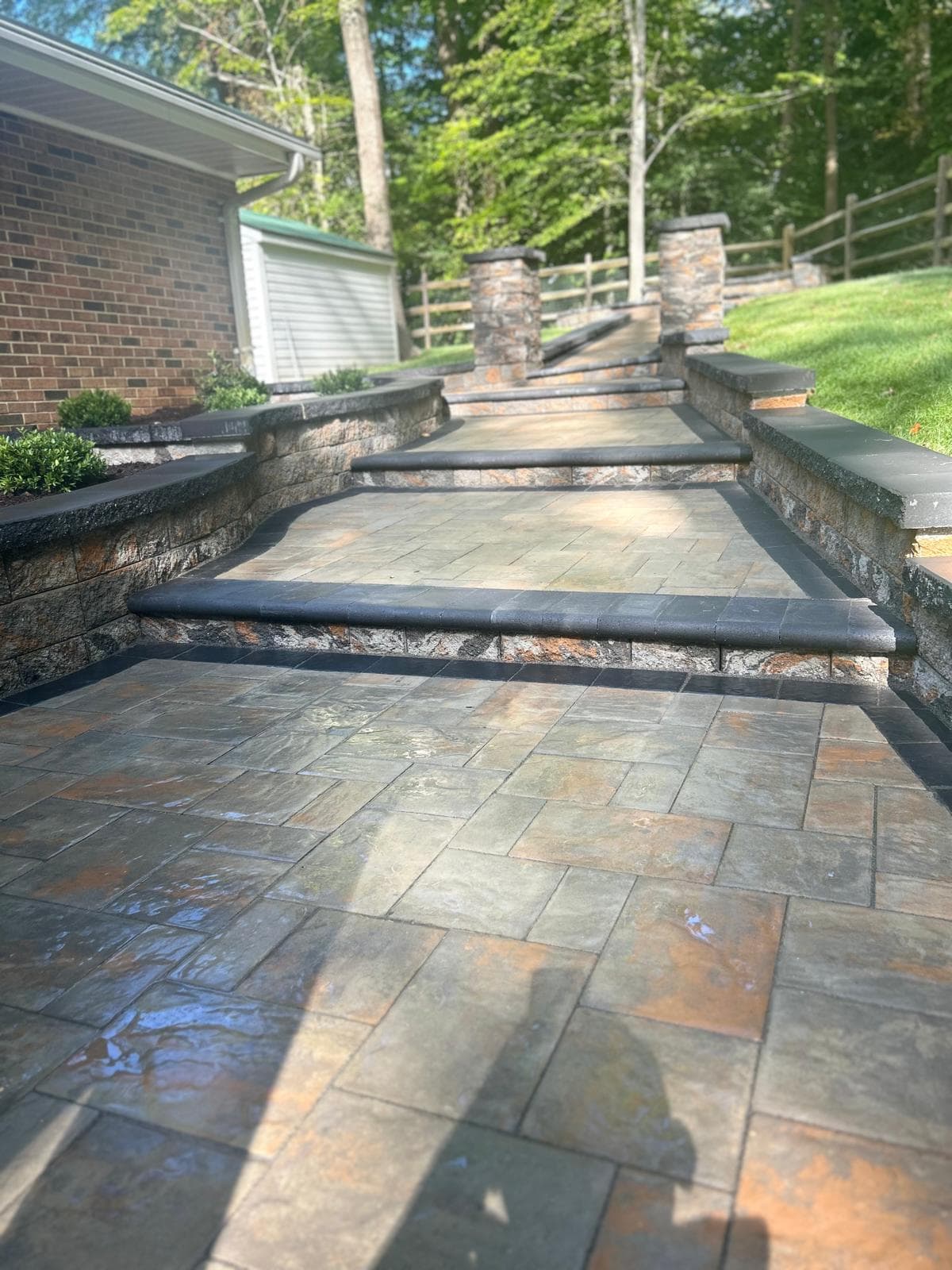
Half of the retaining walls I look at in Springfield and Burke were built by someone who quoted the job by the linear foot and forgot that the wall is holding back a hill. They lean within five years. The price homeowners paid felt fair on paper — until the rebuild quote came in, and the rebuild is always more expensive than doing it right the first time.
I'm Nelson, owner of Kaeler. We build retaining walls across Springfield, Burke, Annandale, Fairfax Station, and the surrounding clay-bound NoVA neighborhoods where walls actually have a job to do. Below is the real 2026 cost breakdown — what you pay, why the price moves, and how to tell whether a quote is engineering a wall or just stacking blocks.
The short answer: 2026 retaining wall cost in NoVA
For a typical Springfield or Burke retaining wall — segmental block, 3 to 6 feet tall, properly drained — expect:
| Wall height | Cost per linear foot (installed) | 30 linear ft total |
|---|---|---|
| Under 3 ft (decorative / seat wall) | $45 – $85 | $1,400 – $2,600 |
| 3 to 4 ft (standard) | $95 – $155 | $2,900 – $4,700 |
| 4 to 6 ft (engineered) | $165 – $260 | $5,000 – $7,800 |
| 6 to 8 ft (tiered or engineered) | $280 – $450+ | $8,400 – $13,500+ |
| Boulder / natural stone | $145 – $310 | $4,400 – $9,300 |
The range is wide because the wall above ground is roughly a third of the total job. The base, the geogrid, the backfill, and the drainage all live behind the wall — and that is where the price actually moves.
Cost breakdown by line item
Block and material (2026 NoVA pricing)
| Block type | Material cost / sq ft of wall face | Use case |
|---|---|---|
| Standard segmental block (Allan Block, Versa-Lok, Belgard Anchor) | $5.50 – $9.00 | Workhorse. Springfield, Burke, Annandale yards. |
| Architectural / textured segmental | $9.00 – $13.50 | Vienna, Oakton, Falls Church curb appeal. |
| Natural stone veneer over block | $18.00 – $28.00 | Estate work, McLean, Great Falls. |
| Loose boulder placement | $14.00 – $24.00 | Naturalistic walls, large lots, Fairfax Station. |
| Poured-in-place concrete with form-liner | $22.00 – $38.00 | Architectural projects, occasional in 22102. |
Block alone is not the install cost. Behind the wall you also pay for: geogrid reinforcement (every 2 vertical feet on a typical segmental wall), 12 inches of drainage stone behind the block, a perforated drain pipe daylighted to grade, filter fabric, and compacted granular backfill in 6-inch lifts. Those hidden materials add $22–$48 per linear foot before labor.
Excavation, base, and labor
A retaining wall in NoVA clay needs serious base preparation. A 4-foot wall requires:
- Excavation 18–24 inches deep at the wall footprint and another 24 inches behind it
- 6 inches of compacted VDOT #57 stone as a base, screeded level
- First course buried at least one block height for stability
- Geogrid reinforcement anchored into the wall and extended back into the slope (length = 60% of wall height, minimum)
- Perforated drain pipe at the base behind the wall, sleeved in filter fabric, daylighted to a low point
- Compacted backfill in 6-inch lifts with a plate compactor between each lift
- Cap blocks glued with PL Premium or block-specific adhesive
Labor for that sequence in 2026 runs $50–$90 per linear foot in Northern Virginia for a 4-foot wall. Crews quoting $30–$40 are skipping base depth, skipping geogrid, or backfilling with the soil they just dug out — which is exactly the soil that failed before you called them.
Engineering and permit line items
In Fairfax County, any retaining wall over 3 feet tall (measured from the bottom of the footing to the top of the wall) requires a permit and an engineer's stamp. This is non-negotiable, and it adds real cost to the project.
| Line item | Cost adder | When it applies |
|---|---|---|
| Engineered stamp (PE-signed plans) | $700 – $2,400 | Any wall over 3 ft in Fairfax County |
| Soil compaction test | $250 – $600 | Required by some inspectors |
| Permit pull (Fairfax County) | $180 – $620 | Walls over 3 ft, or tied to drainage |
| Survey for property line / setback | $400 – $1,100 | Walls near a property line |
| Erosion and sediment control plan | $300 – $900 | Walls disturbing more than 2,500 sq ft |
| Stairs cut into the wall | $1,400 – $4,200 | Walkable terraced walls |
A 4-foot wall in Burke with a permit, engineer stamp, and a small set of integrated steps will typically add $2,800–$5,200 to the per-linear-foot number above.
Cost by city: Springfield vs Burke vs Annandale
Same wall, same height, same block — different ZIP, different price. Here is why.
Springfield (22150, 22151, 22152)
- Typical 30 ft, 4 ft tall wall installed: $3,200 – $4,800
- Driver: Lots are smaller and walls are usually shorter — most of what we build in 22150 is decorative or low retaining (under 4 ft). Soil is heavy clay, drainage tie-ins are universal, and a lot of original 1970s walls are getting replaced after failing.
- What to budget: $4,100 all-in for a 30-foot, 4-foot-tall block wall with drainage, geogrid, and a small step.
Burke (22015)
- Typical 30 ft, 4 ft tall wall installed: $3,800 – $5,800
- Driver: Burke has more sloped lots than Springfield, so walls are taller and more often engineered. HOA approval is common in the major subdivisions (Burke Centre, Cherry Run). Permits land at the higher end of the county range.
- What to budget: $4,900 all-in. The bump over Springfield is mostly HOA review time and the higher likelihood of an engineered design.
Annandale & Fairfax Station (22003, 22039)
- Typical 30 ft, 4 ft tall wall installed: $4,200 – $6,400
- Driver: Larger lots and more terraced builds. Many Annandale walls integrate with patios or driveways — so we frequently build the wall as part of a bigger hardscape job. Erosion control plans more common because lots have real slope.
- What to budget: $5,200 all-in for a standalone wall, more if the wall is part of a patio or drive integration.
If your slope is doing more than holding mulch in place, book a free same-week wall site visit and I'll spec the wall to the actual grade, not to a number off a website.
What drives a wall from "lower end" to "upper end"
- Height. The price per linear foot roughly doubles between a 3-foot wall and a 6-foot wall, because geogrid count doubles and you trigger engineered drawings.
- Drainage. A wall without drainage in NoVA clay is a wall on a timer. Adding a proper perforated drain with daylighted outflow is $14–$28 per linear foot, and it is the single biggest predictor of whether the wall is still vertical in year 15.
- Tiered vs single wall. Two 3-foot walls with a 3-foot bench between them are often cheaper than one 6-foot wall because each can sometimes stay under the permit threshold. We weigh this every time on a sloped lot.
- Block grade. Standard segmental → architectural is +25–45%. Natural stone veneer doubles the wall face cost.
- Steps and corners. Each integrated step adds $400–$1,400. Each 90° corner adds $200–$600 because the cap stones have to be cut.
- Site access. Block weight is the silent multiplier — a 4-foot wall is 800–1,400 lbs of block per linear foot. Wheelbarrowed material from a far-side street adds 12–20% labor.
The five-step Kaeler retaining-wall sequence
Every wall over 3 feet we build follows this exact sequence. If your contractor's quote doesn't itemize each of these, ask why.
- Excavate and grade the footprint. 18–24 inches deep at the base, 24 inches of clear space behind the wall for proper backfill.
- Place and compact the base. 6 inches of crushed VDOT #57, screeded level, compacted with a plate compactor. The first course of block buries below grade.
- Build courses with geogrid. Every two vertical feet, geogrid extends back into the slope — length equal to at least 60% of wall height, anchored between block courses.
- Install drainage behind the wall. Perforated PVC pipe in filter fabric, set in 12 inches of clean drainage stone, daylighted to grade at the low end. This is the step skipped on every failed wall I look at.
- Backfill in lifts and cap. Granular backfill in 6-inch lifts, compacted between each lift. Cap blocks glued with PL Premium adhesive. Topsoil and seed/sod the slope above.
Permits and Fairfax County rules
Most retaining walls under 3 feet in height do not require a permit in Fairfax County. Walls become permitted projects when:
- Wall height exceeds 3 feet measured from bottom of footing to top of wall
- The wall is part of a stormwater management feature (level spreader, sediment trap)
- The wall is within a setback or on a recorded easement
- The wall ties into a county storm sewer or disturbs more than 2,500 sq ft of land
- Your HOA requires architectural review (Burke Centre, Kings Park, Fairfax Station, Annandale Acres)
We pull permits on roughly 4 in 10 wall jobs in Burke and 3 in 10 in Springfield. Permits run $180–$620, plus a PE stamp at $700–$2,400 for engineered walls.
How to compare 3 retaining-wall quotes
If you are shopping the job, expect a 35–60% spread between low and high bids. Here is how to read the gap:
- Ask for base depth and base material. "We build a strong base" is not an answer. Get inches and the spec (VDOT #57 is the right answer in NoVA).
- Ask whether the wall has geogrid. Below 3 feet, geogrid may be optional. Above 4 feet without it, the wall is a wait-and-see project.
- Ask whether the quote includes engineered drawings if the wall is over 3 feet. If it does not, the contractor is hoping the inspector misses it.
- Ask where the drainage daylights. "There's a drain" is not enough — drains need a low point.
- Ask for three local references with addresses and dates you can verify in your specific city.
Frequently asked questions
How long does a retaining wall last in Northern Virginia?
A properly engineered segmental block wall (correct base, geogrid every 2 vertical feet, drainage, compacted lifts) lasts 40–75 years in NoVA's freeze-thaw climate. A skip-the-drainage wall starts leaning by year 5 to 8.
Do I need a permit for a retaining wall in Fairfax County?
If the wall is over 3 feet tall from the bottom of the footing to the top of the wall, yes — and it needs an engineer's stamp. We confirm during the site visit and pull both the permit and the engineering when applicable. For a detailed walkthrough of the permit process, see our piece on Fairfax County retaining wall permits.
Boulder wall vs block wall — which lasts longer?
Both last decades when installed correctly. Block walls give you a flatter face and more precise stepped engineering. Boulder walls look more natural and are usually faster to build on irregular grade. On clay-bound slopes in Burke and Springfield, we still trust an engineered segmental block wall over loose boulders for anything over 4 feet.
Why do retaining walls fail in Northern Virginia?
Three reasons, in order: no drainage behind the wall, no geogrid (or geogrid too short), and backfill compacted with the wrong material. Clay backfill holds water. Granular backfill drains. We have rebuilt dozens of walls where the original crew backfilled with the soil they dug out — see our deeper dive on drainage solutions in NoVA clay soil.
Can a retaining wall be combined with a patio?
Yes — and on most NoVA sloped lots it is the smarter sequence. The wall corrects the grade, the patio sits on the flat. We frequently build the two together on the same crew rotation. For typical patio pricing on that flat, see our breakdown of paver patio cost in Northern Virginia.
What's the cheapest legitimate retaining wall in NoVA?
Standard segmental block, under 3 feet tall, decorative use (raised bed, seat wall), simple straight run, level ground. That gets you to roughly $1,400–$2,200 for a 30-foot wall installed correctly. Anything cheaper is skipping a step.
Ready to scope your wall?
If you want a real number for your actual slope — not a generic per-foot estimate — get a same-week site visit. I personally walk every wall job, measure the grade change, and the quote you receive itemizes block, base, geogrid, drainage, backfill, permit, and steps so you can line it up against any other bid.
Get my free retaining wall estimate →
We build walls across Springfield, Burke, Annandale, Fairfax, Fairfax Station, Vienna, McLean, and Great Falls. See all 18 areas we serve.