April 4, 2026 · 5 min read
Drainage Solutions for Northern Virginia Clay Soil
By Nelson at Kaeler
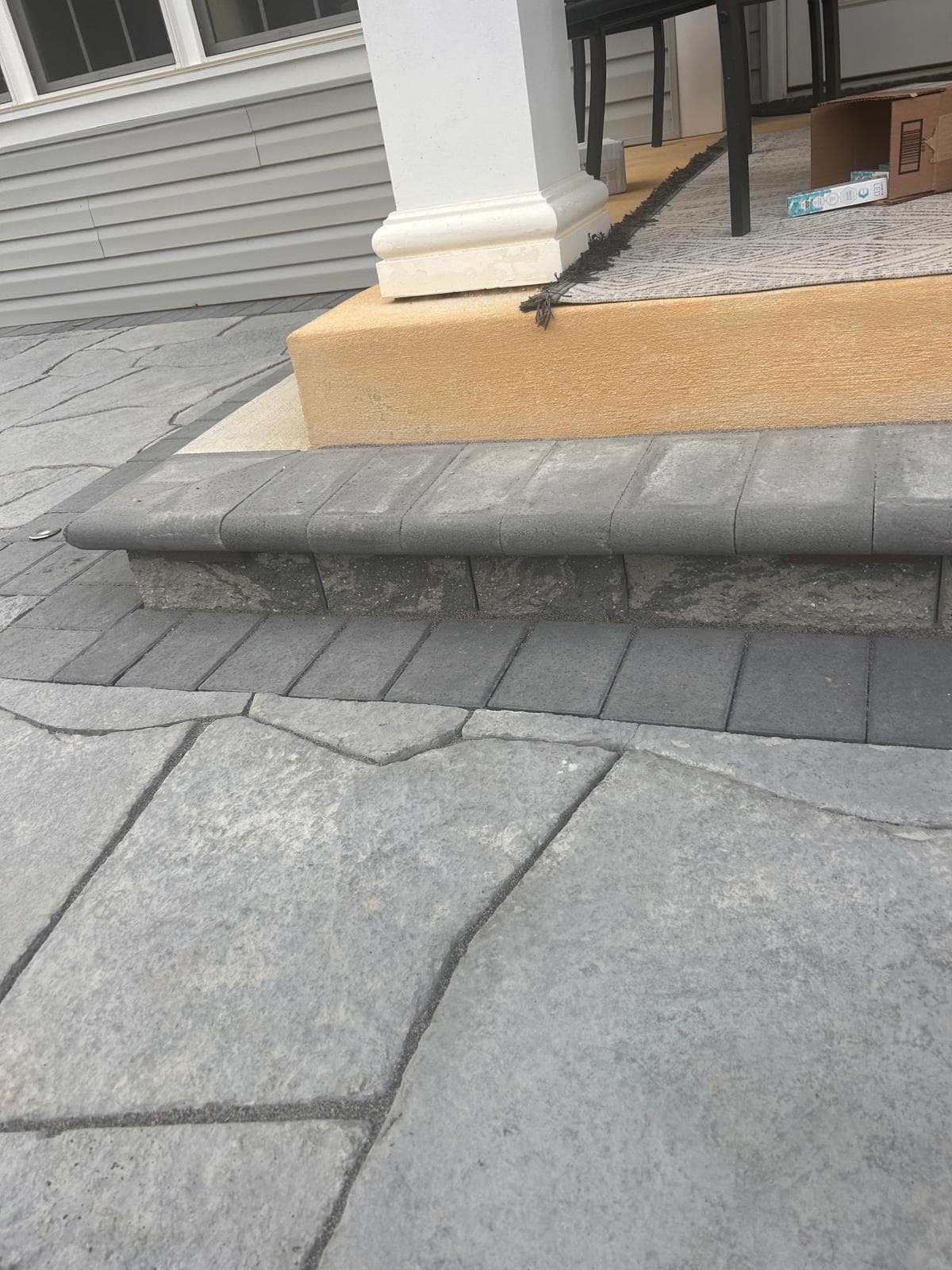
Almost every drainage call we get in Fairfax County starts the same way: "I've had three contractors look at this and none of their fixes worked." That's because most fixes treat the symptom (the puddle, the wet basement wall, the cracked patio) without addressing the actual cause: Northern Virginia's clay-heavy soil and how water moves through it.
We've been correcting drainage problems across Springfield, Burke, Annandale, and the surrounding county for two decades. Here's what we've learned, what works, and what's a waste of money.
Why NoVA clay is the problem
The soil across most of Fairfax County is what soil scientists call "Glenelg silt loam" or, in the heavier areas around Springfield and Burke, plain clay. Clay has two miserable properties for drainage:
- It absorbs water slowly. Heavy rain pools on the surface for hours instead of percolating down.
- Once saturated, it stays saturated for days. Even after the surface dries, the subsurface remains wet, which is why your boots sink into your "dry" lawn three days after a storm.
This means almost every drainage fix that works on sandier soils — gravel-filled French drains, dry wells, soak pits — works at half capacity here. You need to over-engineer.
What doesn't work
Surface regrading alone. Sloping the lawn away from the house is necessary but rarely sufficient. Water sheds off, but it pools at the lowest point, and now you have a soggy spot 20 feet from the house instead of at the foundation. We've seen well-intentioned regrades simply move the problem.
Single-pipe French drains. A 4-inch perforated pipe in gravel works on sandy soil. On clay, it clogs with sediment within 18 months and the surrounding clay refuses to release water into it. We've dug up a lot of failed French drains in this market.
Dry wells without daylighting. A dry well buried in clay is a $2,000 hole. The water has nowhere to go because clay won't accept the volume.
Gutter extensions that dump on the lawn. All you've done is concentrate the runoff at one point. The lawn there will be permanently saturated.
What actually works on clay
Engineered surface drainage with daylight outlets. The water has to leave the property via a hard outlet — into the street, into a stormwater swale, into a properly engineered dry well that's connected to a pop-up emitter. We design every drainage system with a defined exit path. Water in, water out.
Multi-pipe systems with cleanouts. Where a French drain is needed, we install dual-pipe (one perforated, one solid) with sock-wrapped pipe to prevent clay infiltration, plus cleanout ports every 30 feet so the system can be flushed annually. Adds 30% to the cost, lasts 20+ years instead of 18 months.
Catch basins at low points. Hard catch basins with grates collect surface water before it has a chance to soak in. The basin connects to a buried solid pipe that daylights at the property edge. Properly placed, a catch basin can solve a chronic puddle problem in one afternoon.
Permeable hardscape for parking and driveway areas. Rather than fighting water, route it through a permeable paver system with a 12-inch open-graded base. The base acts as detention storage, releasing water slowly. We've installed these in front of garages where standing water was destroying the apron.
Rain gardens at the property low point. Where regulations and aesthetics allow, a properly engineered rain garden — 18 inches of amended soil with deep-rooted natives — can absorb and process runoff sustainably. Beautiful and functional.
What we charge
Real drainage work is not cheap. A serious correction for a chronic problem typically runs $4,000-$15,000 depending on excavation depth, distance to a viable outlet, and whether hardscape removal is needed. The good news: properly designed drainage solves the problem permanently, doesn't require maintenance beyond annual cleanout flushing, and protects every other investment in your yard (lawn, patio, foundation).
What to look for in a contractor
The cheap drainage fix is almost always wrong. If a contractor proposes a single French drain or a dry well without an outlet, get a second opinion. The right contractor will walk your property in the rain (yes, in the rain — that's when you can actually see where the water goes), trace the runoff path, identify the bottleneck, and propose a system with a defined exit.
Frequently asked questions
Why does drainage fail so often in Northern Virginia?
Because the clay under most NoVA topsoil absorbs water at well under half an inch per hour. Systems designed for percolating soil — dry wells especially — simply fill and stay full here. Anything that works on our clay has to move water to a defined exit rather than store it.
Do dry wells work in NoVA clay soil?
Usually not. A percolation test in Springfield, Annandale, or Burke commonly returns 0.05 to 0.15 inches per hour, which is well below what a dry well needs. Better-drained pockets in McLean and Great Falls are the exception. Our French drain versus dry well comparison has the test method and the thresholds.
What does drainage correction cost in Northern Virginia?
A serious correction for a chronic problem runs $4,000 – $15,000 depending on excavation depth, distance to a viable outlet, and whether existing hardscape has to come up. A straightforward French drain to daylight runs $40 – $75 per linear foot.
Do I need a permit for yard drainage?
Not for a system that collects and discharges water entirely on your own property. Permits come into play with a county storm sewer tie-in, discharge onto a neighbour's lot, or work inside a Resource Protection Area or drainage easement — covered in our Fairfax County drainage permit guide.
How long does a properly installed drainage system last?
A correctly built French drain — right depth, stone backfill, geotextile-wrapped pipe, daylighted outflow — lasts 30 to 50 years here. The only maintenance is an annual cleanout flush.
Got chronic standing water, a wet basement wall, or a patio that keeps cracking from heave? Reach out — we'll do a rain walk and tell you what your property actually needs.