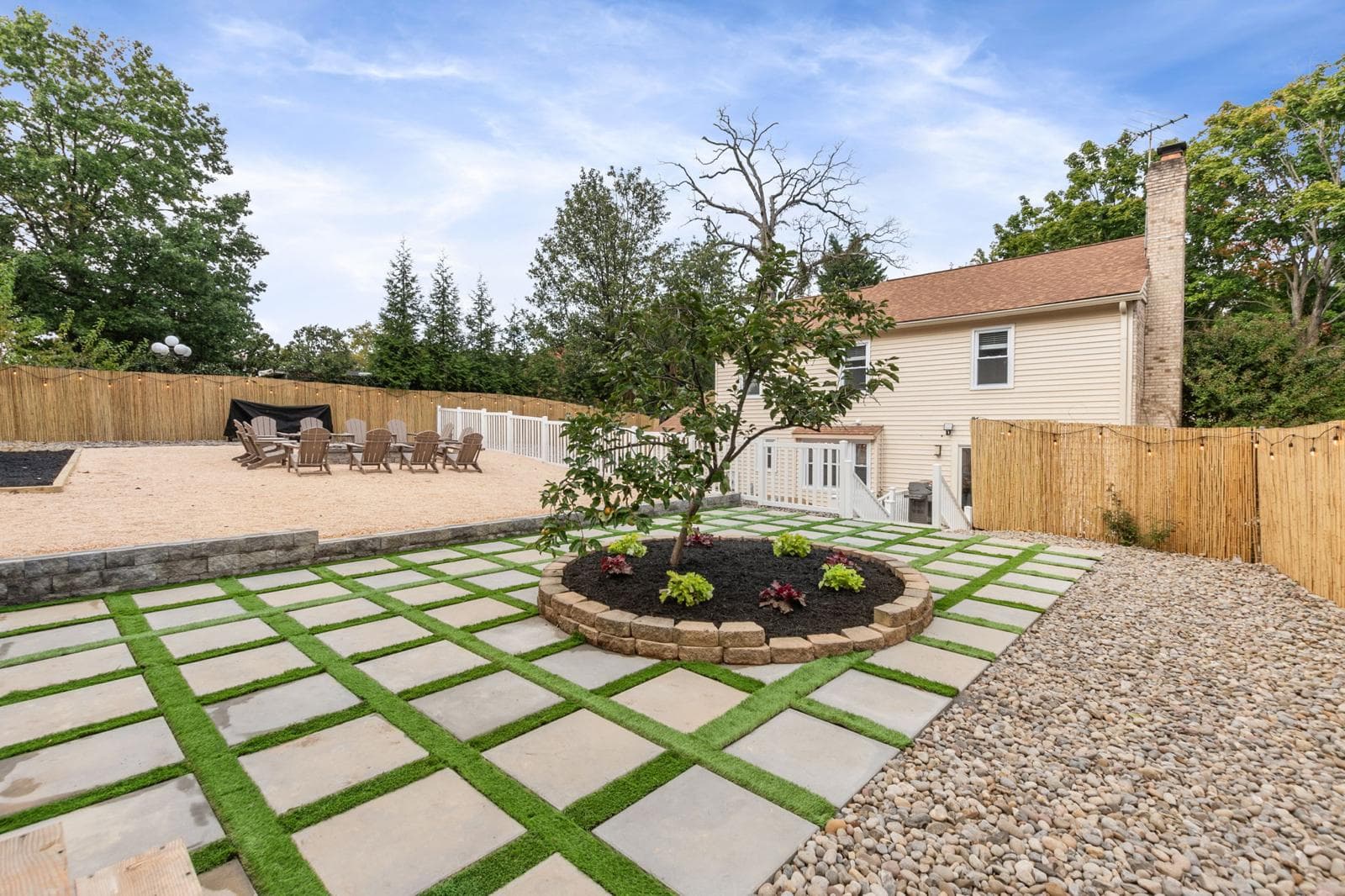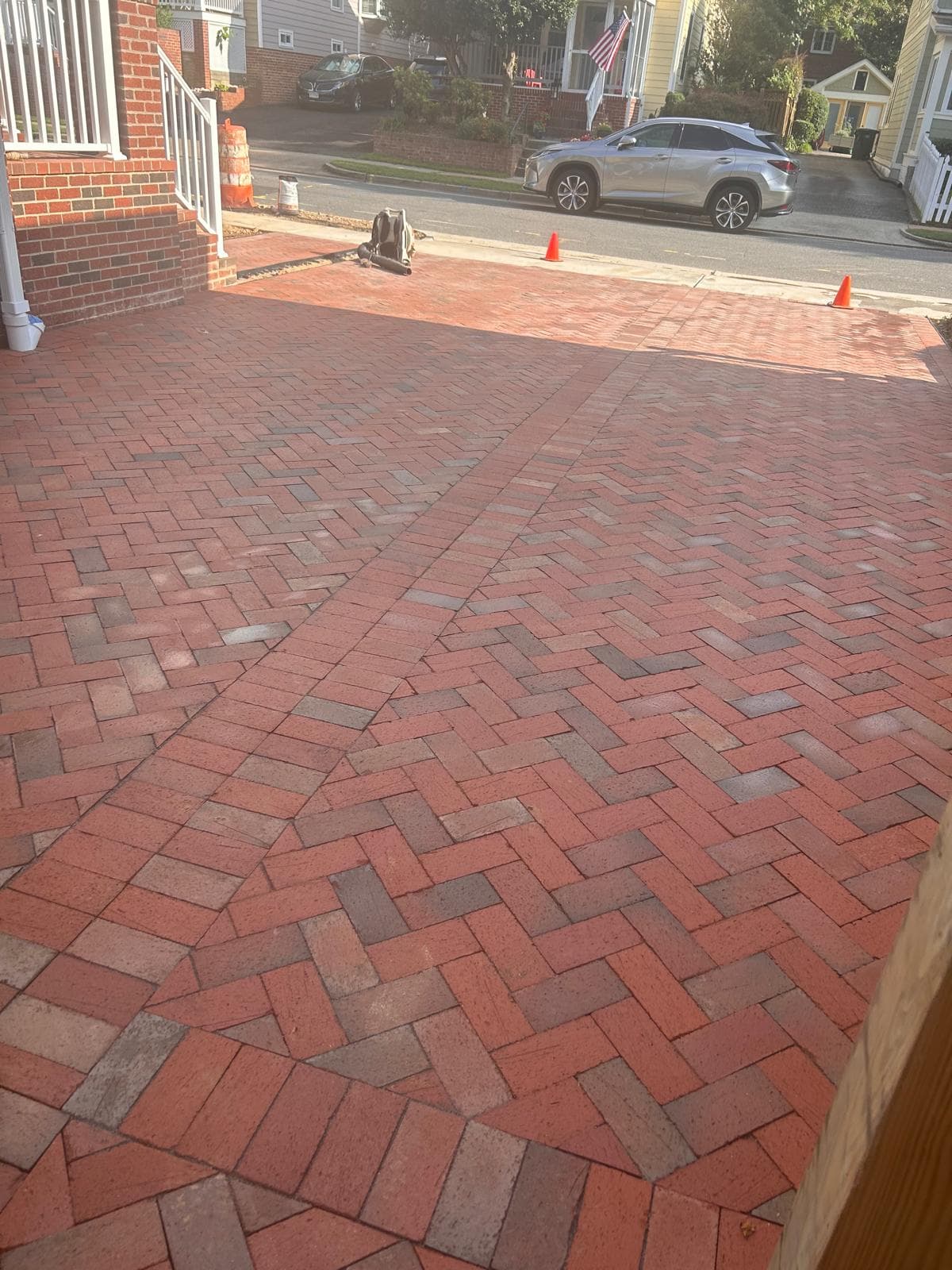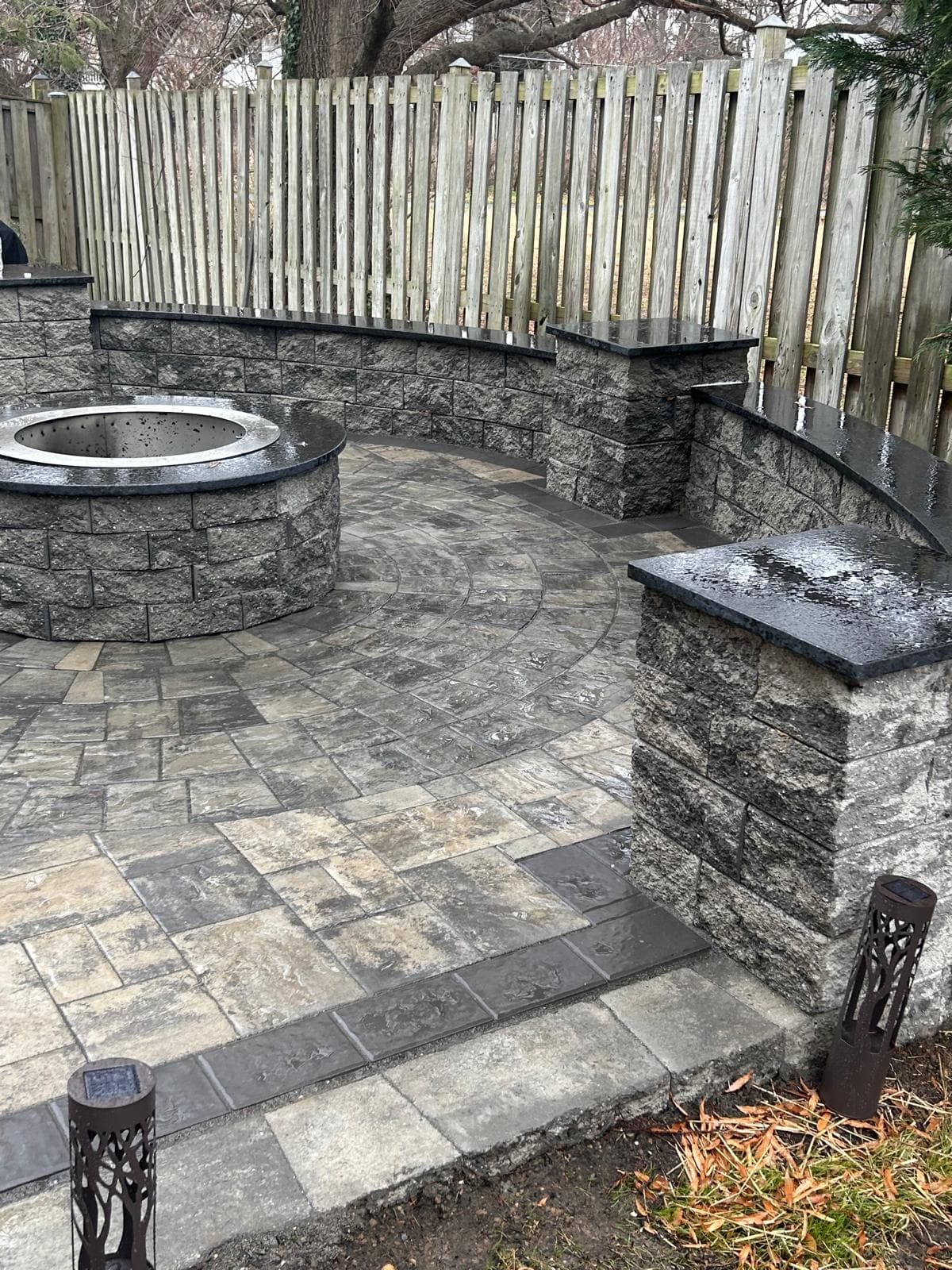
A $40,000 outdoor kitchen build in McLean or Vienna delivers zero value if the family won't sit on it from late June through early September because of mosquitoes. Northern Virginia's humid summers, mature tree canopy, and clay-soil drainage make mosquito pressure higher here than in most US suburbs.
The good news: a few design choices upfront — at hardscape design phase, not as retrofit — keep mosquito pressure low enough that the patio is usable May through October. This is the Kaeler 2026 playbook for mosquito-aware outdoor living.
The short answer: design the water out
Mosquitoes need standing water to breed. The Asian tiger mosquito — dominant in NoVA — breeds in any container holding water for more than 5 days, including the curl of a leaf, a tire indentation, or the saucer of a planter.
Eliminate standing water on the property and within 100 ft of the patio, and ambient mosquito pressure drops 60–80%. That single principle drives most of the design decisions below.
Design choices that reduce mosquito pressure
1. Slope patios away from the house, never toward planted beds
Standard hardscape spec: patios pitch 1/8 inch per foot away from the house. The flip side of that rule is where the water goes. If your patio drains to a low spot at the edge that has zero outflow, you've built a mosquito hatchery.
Right way: pitch the patio toward a French drain, a daylight outlet, or a properly-graded lawn that channels the water away from the patio area entirely. Wrong way: pitch toward a 12-inch deep mulched bed with no underlying drain.
For deeper context on patio drainage design, see our piece on drainage before patio: why order matters.
2. Use closed-cell polymeric joint sand
Polymeric sand sets into a near-solid surface between pavers. Stops water from collecting in paver joints. The traditional play sand or stone dust used by cheap installers holds water in every joint — multiplying breeding micro-sites by 200x on a single 400 sq ft patio.
Specify polymeric on any new install. Cost: $0.80–$1.40 per sq ft more than play sand. Mosquito impact: dramatic.
3. Stamped concrete + paver edges shed water better than flagstone
Natural flagstone is beautiful but creates the worst mosquito micro-environment in NoVA: irregular surface = water pockets + organic debris caught in joints. Stamped concrete and properly-jointed pavers shed water faster and dry within 1–2 hours of rain.
If client wants flagstone aesthetic: use thermal-finish (textured) bluestone with very tight joints + polymeric sand. Avoid traditional irregular flagstone with grass joints.
4. Plant the right things 6+ feet away from sitting areas
Plants that repel mosquitoes (or at least don't attract them):
- Lavender
- Rosemary
- Citronella grass (annual in NoVA)
- Bee balm (Monarda)
- Marigolds (annual)
- Catnip
Plants that attract mosquitoes or harbor them:
- Dense low groundcover (English ivy, pachysandra) — holds humidity at ground level
- Bamboo — water collects in cut stalks
- Cypress and arborvitae hedges close to patio — block airflow
For native and seasonal NoVA planting advice see our piece on native plants for Fairfax County.
5. Add a ceiling fan to any covered outdoor area
Mosquitoes are weak fliers. A ceiling fan running at low speed creates enough air movement to make a 12 × 16 ft pergola or pavilion nearly mosquito-free. Cost: $480–$1,100 installed including outdoor-rated electrical box.
This is the single highest-ROI mosquito mitigation we install. Every full pergola/pavilion build should include a fan.
For pricing context on pergolas and ceiling fans, see our piece on pergola cost in McLean and Great Falls.
Hardscape features that help
| Feature | Mosquito impact | 2026 cost (NoVA install) |
|---|---|---|
| French drain along patio uphill edge | Major — intercepts standing water | $1,200 – $2,250 |
| Polymeric joint sand vs play sand | Major — eliminates joint breeding sites | +$300 – $560 on 400 sq ft patio |
| Ceiling fan in pergola/pavilion | Major — moving air = no landing | $480 – $1,100 |
| Outdoor wall fans (mounted) | Moderate — for open patios | $200 – $400 each |
| Screened porch (vs open patio) | Maximum — physical barrier | $14,000 – $32,000 |
| Mosquito netting drape (manual) | Moderate — seasonal install | $400 – $1,200 |
| Lighting choice: yellow / amber LEDs | Mild — less attractive to mosquitoes | included in lighting plan |
What about mosquito control services (spraying)?
The two main commercial mosquito control approaches in NoVA:
Synthetic pyrethroid spray (Mosquito Joe, Mosquito Squad type companies):
- Cost: $80–$130 per visit, every 21 days = ~6 visits/season = $480–$780/year
- Effectiveness: real but kills pollinators + beneficial insects alongside mosquitoes
- Environmental concern: Loudoun County has issued advisories against routine spraying
Mosquito Magnet / CO2 traps:
- Cost: $300–$1,200 device + $40/month propane
- Effectiveness: moderate, requires consistent operation
- No pollinator impact
Our recommendation for most clients: design out breeding sites + add ceiling fan + use citronella + amber lighting. Skip routine spraying. Most homeowners who do good hardscape design + landscape design report 70%+ reduction in mosquito pressure without chemicals.
The four common mistakes in NoVA outdoor builds
- Mulched bed directly adjacent to patio with no drainage layer. Mulch holds moisture for days. Breeding paradise.
- Decorative rock features (boulder pits, dry stream beds) without underdrain. Trap water and debris in stone gaps.
- Birdbath, water feature, or pondless fountain within 30 ft of patio. Even with circulation, the rim and surrounding rocks pool water.
- Pool covers held in tension that pond water in low spots. A 1-inch-deep puddle on a pool cover is 50,000 mosquito eggs in a week.
What we audit on every site visit
For any new outdoor living build (patio, pergola, kitchen), the Kaeler audit checklist includes:
- [ ] Existing drainage flow paths — where does water sit after rain?
- [ ] Downspouts — extended to drain >12 ft from foundation?
- [ ] Mulched beds adjacent to patio location — do they have underdrains?
- [ ] Tree canopy density over the patio area — airflow assessment
- [ ] Existing water features and how they will integrate
- [ ] Pool cover or pool deck slope if applicable
- [ ] Neighboring properties' water issues that could affect yours
Two hours of audit at the front end save many years of patio frustration.
Frequently asked questions
What's the worst month for mosquitoes in Northern Virginia?
Mid-July through end of August. Peak is typically the third week of July after summer thunderstorm cycles. Pressure drops sharply by mid-September.
Will a screened porch eliminate mosquitoes entirely?
A properly built screened porch with tight screens, weatherstripped doors, and adequate ventilation reduces mosquito presence by 95%+. It does not eliminate entirely (door openings, hitchhiking on people/pets), but for evening use it is the most effective single intervention.
Are mosquito-repelling plants actually effective?
Limited impact when planted alone. A border of lavender or citronella reduces pressure by maybe 10–15%. The combo of plants + airflow + eliminated breeding sites is what works.
Do citronella candles help?
Marginally, within 3–4 feet of the candle. Not a primary mosquito strategy. Best for accent + ambiance.
What about bat houses?
NoVA does have insect-eating bat populations. A bat house mounted 12+ ft up on a south-facing pole near (but not over) the patio is a low-cost addition that helps. Hard to quantify exact mosquito reduction. Some homeowners install them more as a fun ecology feature than for measurable mosquito control.
Ready to scope a mosquito-aware build?
If you are planning an outdoor build and want to design out mosquito pressure from day one — not as a retrofit — book a free site visit. We will walk the lot, map drainage, and design the build with the audit checklist above.
We design outdoor living spaces across McLean, Vienna, Oakton, Fairfax, and the rest of the 18 NoVA cities we serve. See all areas we serve.