May 15, 2026 · 9 min read
Paver Patio Cost in Northern Virginia (2026)
By Nelson at Kaeler
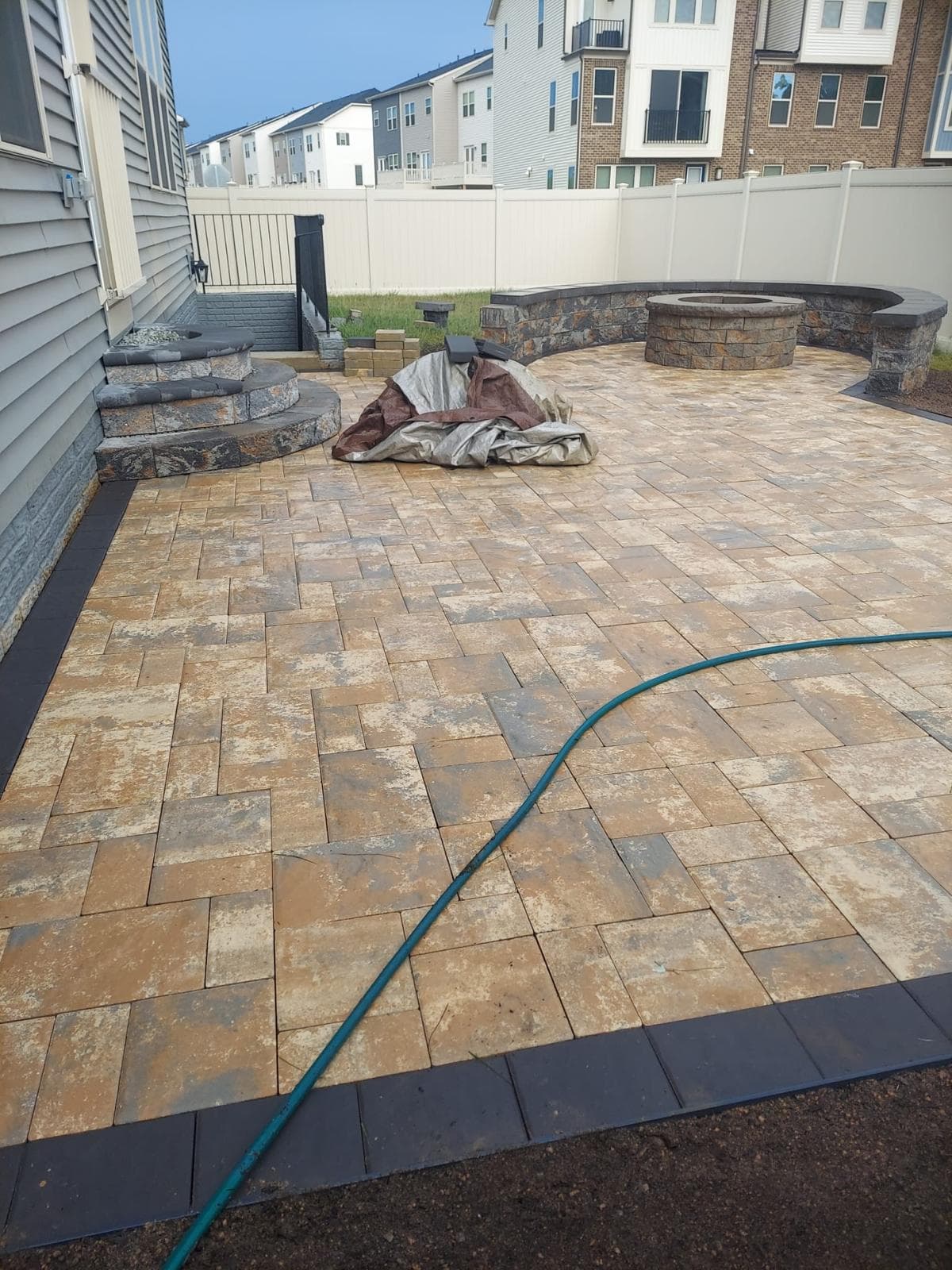
Every spring we get the same question, three or four times a week: "What does a paver patio actually cost in Northern Virginia in 2026?" The honest answer is between $18 and $42 per square foot installed, with most Kaeler clients landing around $28–$34/sq ft once the project is fully scoped. But that range is wide for a reason — material choice, site conditions, drainage, and the neighborhood you live in all swing the number significantly.
I'm Nelson, the owner of Kaeler. We've installed paver patios across Springfield, Burke, Fairfax, Annandale, McLean, Vienna, and the surrounding ZIPs for almost two decades. This article is the same breakdown I walk homeowners through during a site visit — what you're paying for, where the price moves, and which line items most contractors don't tell you about until the change order shows up.
The short answer: 2026 paver patio cost in NoVA
For a typical Northern Virginia install — 300–500 sq ft, standard concrete paver, level grade, no major drainage issue — expect:
| Size | Total range (2026) | Typical install |
|---|---|---|
| Small patio, 200 sq ft | $4,800 – $7,600 | $6,400 |
| Medium patio, 400 sq ft | $9,600 – $15,200 | $12,800 |
| Large patio, 600 sq ft | $14,400 – $22,800 | $19,200 |
| Estate patio, 900+ sq ft | $21,600 – $42,000+ | $30,000+ |
The variance comes from material grade, site prep, and labor — not from contractor markup tricks. A well-run NoVA crew running concrete pavers on a clean site sits near the lower end of each range. A clay-bound, slope-corrected, premium-material job in McLean or Great Falls sits at the top.
Cost breakdown by line item
Materials per square foot (2026 NoVA pricing)
| Paver type | Material cost / sq ft | Use case |
|---|---|---|
| Standard concrete paver (Belgard, Techo-Bloc base lines) | $4.50 – $7.00 | Workhorse choice. Springfield, Burke, Annandale. |
| Premium concrete paver (textured, color-blended) | $7.00 – $10.50 | Mid-range Fairfax, Vienna, Oakton. |
| Porcelain pavers (2cm) | $11.00 – $16.00 | Modern designs, McLean, Tysons, Reston. |
| Clay pavers (true brick) | $9.00 – $14.00 | Historic Old Town Alexandria, Falls Church. |
| Natural stone (flagstone, travertine) | $13.00 – $22.00 | Estate work, Great Falls, McLean, Fairfax Station. |
Material alone isn't the install cost — these are just the paver units. You're also paying for the base layers underneath: 4–6 inches of compacted crushed stone (typically VDOT #57 + #21A blend), an inch of bedding sand or polymeric sand, and the edge restraint. Together, base materials add $3.00–$5.50 per sq ft before labor.
Labor and excavation
Labor is the single biggest line item, and it's where the price difference between contractors really lives. A proper paver patio in NoVA requires:
- Excavation 8–10 inches deep (deeper if the soil is heavy clay, which it is across most of Fairfax County)
- Subgrade compaction with a plate compactor — not just "tamped down by hand"
- Geotextile fabric between subgrade and stone base
- Base built up in 2-inch lifts, compacted between each lift
- Edge restraint spiked into the base, not just sitting on top
- Polymeric joint sand, swept in and water-activated
Labor for that full sequence in 2026 runs $9–$15 per square foot in Northern Virginia. Crews charging $5–$7/sq ft labor are skipping steps — usually base depth, compaction lifts, or edge restraint. You'll see the result in year 3 when the patio starts heaving.
Site-specific add-ons
These are the line items that surprise homeowners. They aren't optional on most NoVA properties.
| Line item | Cost adder | When it applies |
|---|---|---|
| Drainage tie-in (French drain, downspout extension) | $800 – $3,400 | Clay-heavy yards (Springfield, Burke, Annandale) |
| Slope grading / retaining mini-wall | $1,200 – $6,500 | Sloped yards (Burke, Fairfax Station, Great Falls) |
| Tree-root excavation | $400 – $1,800 | Mature lots in Vienna, Falls Church, Oakton |
| Demo of existing concrete slab | $3 – $6 / sq ft | 1970s-era homes, very common in 22150 and 22151 |
| Permit pull (if patio attaches to deck or wall) | $150 – $600 | Most attached patios; Fairfax County review |
| Polymeric joint sand upgrade | $0.80 – $1.40 / sq ft | Standard on Kaeler installs, often skipped elsewhere |
For a typical 400 sq ft project in Springfield with one drainage tie-in and a small slope correction, expect $1,800–$4,200 in adders on top of the per-sq-ft number above.
Cost by city: Springfield vs Fairfax vs McLean
Same exact 400 sq ft patio, same paver, same crew — different city, different final price. Here's why.
Springfield (22150, 22151, 22152)
- Typical 400 sq ft install: $10,800 – $13,600
- Driver: Heavy clay, plus most homes have an original 1970s slab that needs demo. Drainage tie-ins are almost universal. Material choice trends mid-range — homeowners are practical, want lifespan over showpiece.
- What to budget: $12,400 all-in for a quality job with demo, base, drainage tie-in, mid-range paver, and polymeric joint sand.
Fairfax (22030, 22031, 22033)
- Typical 400 sq ft install: $12,400 – $16,800
- Driver: Mix of grade levels and mature trees. Permit pulls more common (more attached patios, more HOAs). Material choice trends toward premium concrete or porcelain.
- What to budget: $14,500 all-in. The bump over Springfield is roughly half material grade, half tree-root work.
McLean / Great Falls / Vienna (22101, 22066, 22102, 22182)
- Typical 400 sq ft install: $15,600 – $23,200
- Driver: Larger lots, more grading, premium materials are the norm. Most projects here are part of broader outdoor living builds (patio + kitchen + lighting). Stone and porcelain at the high end.
- What to budget: $18,500 all-in for a patio-only install. Add $12,000–$45,000 if you're integrating outdoor kitchen, pergola, or fireplace — which most McLean projects do.
If you're in any of these areas and want a walk-through specific to your lot, book a free same-week estimate and I'll personally come out.
What drives a project from "lower end" to "upper end"
After hundreds of installs, here's what reliably moves the per-sq-ft number:
- Paver grade. Standard → premium concrete is +30–50%. Premium concrete → porcelain or stone is another +40–60%.
- Base depth. A 4-inch base is fine for a flat, dry lot. Clay-heavy or freeze-prone NoVA soil needs 6–8 inches. The deeper base adds material and labor but is the single biggest predictor of whether the patio is still flat in year 10.
- Drainage. A French drain tie-in adds $800–$2,400 but prevents the cracked patio + wet basement combo that ruins clay-soil installs.
- Patterns and cuts. A simple running bond pattern with stock-sized pavers is fastest. Herringbone, circular kits, mixed-size patterns add 10–25% in labor.
- Borders and inlays. A contrasting paver border is a $300–$900 adder. A natural-stone inlay center or fire pit cutout adds $1,200–$3,500.
- Site access. A backyard reachable through a 36-inch side gate is slower than a yard with rear access. Tight-access jobs add 8–15% labor.
The five-step Kaeler install sequence
I get asked what makes a "good install" versus a "cheap install." Here's the actual sequence we follow. Every NoVA paver patio you'd want to live with for 20+ years needs all five steps.
- Site excavation and grading. 8–10 inches deep, sloped 1/8 inch per foot away from the house. Geotextile fabric over compacted subgrade.
- Base construction. 4–6 inches of compacted crushed stone, built up in 2-inch lifts, compacted with a plate compactor between lifts. We use a VDOT #57 / #21A blend that drains well in our clay soils.
- Bedding layer and edge restraint. 1 inch of clean concrete sand, screeded smooth. Edge restraint spiked into the compacted base (not into the bedding sand).
- Paver installation. Pavers laid tight, cut precisely at borders. Pattern set before any cutting begins.
- Polymeric joint sand and final compaction. Polymeric sand swept into joints, plate-compacted, then water-activated. This is the step most cheap installs skip — it's what keeps the patio from shifting and prevents weed growth.
Permits and Fairfax County rules
Most simple paver patios on grade do not require a permit in Fairfax County. Patios become permitted projects when:
- They attach to a deck (the deck side requires structural review)
- They sit on top of a retaining wall over 3 feet tall (wall requires permit)
- They tie into a county storm sewer or stormwater management system
- Your HOA requires architectural review (common in Burke, Fairfax Station, Reston)
We pull permits on roughly 1 in 4 jobs. Fairfax County permit fees for a typical attached patio run $150–$450 plus inspection time. We include the permit pull in our scope when applicable so you're not chasing it after the crew leaves.
How to compare 3 paver patio quotes
If you're shopping the project, you'll almost certainly get a spread of 30–50% between low and high bids. Here's how to read the gap:
- Ask each contractor for base depth in inches. "We build a proper base" isn't an answer. Get the number. 4 inches is light. 6 inches is standard. 8 inches is robust for clay.
- Ask whether they're using polymeric joint sand or play sand. Play sand washes out in year one.
- Ask whether they pull permits when required. A "no" or a vague "depends" is a red flag — that means it's on you to chase the county if there's a problem.
- Ask whether the same crew that quotes does the install. A lot of NoVA hardscaping is subbed out to traveling crews. We install with our own owner-operated crew on every job.
- Ask for 3 references in your specific city. Not "we've worked in Springfield" — names, addresses, and dates you can verify.
Frequently asked questions
How long does a paver patio last in Northern Virginia?
A properly installed paver patio (base depth, geotextile, polymeric sand, edge restraint) lasts 25–40 years in NoVA's freeze-thaw climate. A cut-corner install starts heaving in years 3–5.
Can a paver patio be installed in winter in Fairfax County?
We install pavers in Northern Virginia from roughly mid-March through mid-December. Once the ground is frozen, base compaction is impossible and polymeric sand won't cure correctly. For more on this, see our deep dive on the best time of year for patio installation in Northern Virginia.
Are pavers better than stamped concrete?
For NoVA's freeze-thaw cycle, pavers win on lifespan and repair. Stamped concrete cracks along its expansion joints in 8–15 years and the repair always looks patched. Individual pavers can be lifted and re-set if they ever settle. We compare materials in detail in our driveway materials guide.
Do I need a permit for a paver patio in Fairfax County?
A simple on-grade paver patio usually does not need a permit. Attached patios, patios on retaining walls, and any project tying into the county storm sewer do. We confirm during the site visit and pull the permit when needed.
What's the cheapest legitimate way to add a paver patio?
Smaller footprint (200–250 sq ft), standard concrete paver, no border inlays, simple running-bond pattern, level lot, no drainage tie-in. That gets you to roughly $5,000–$6,500 for a fully-installed, properly-based patio in Springfield or Annandale. Skip steps below that and you'll be replacing it within 5 years.
Will a paver patio increase my home's resale value?
In neighborhoods where outdoor living is part of the value proposition (Burke, Fairfax Station, Vienna, McLean), yes — we tracked the data across 18 months of MLS in our Springfield ROI analysis. In neighborhoods where buyers prioritize interior square footage, the patio is more for your enjoyment than for resale ROI.
Ready to scope your patio?
If you want a real number for your specific yard — not a national-average estimate from a Google snippet — get a same-week site visit. I personally walk every job, and the quote you receive lists every line item above so you can compare it to anyone else's.
We serve Springfield, Burke, Fairfax, Annandale, Vienna, McLean, Great Falls, Oakton, Fairfax Station, Falls Church, Alexandria, Lorton, Woodbridge, Reston, Herndon, Tysons, Sterling, and Manassas. See all 18 areas we serve.