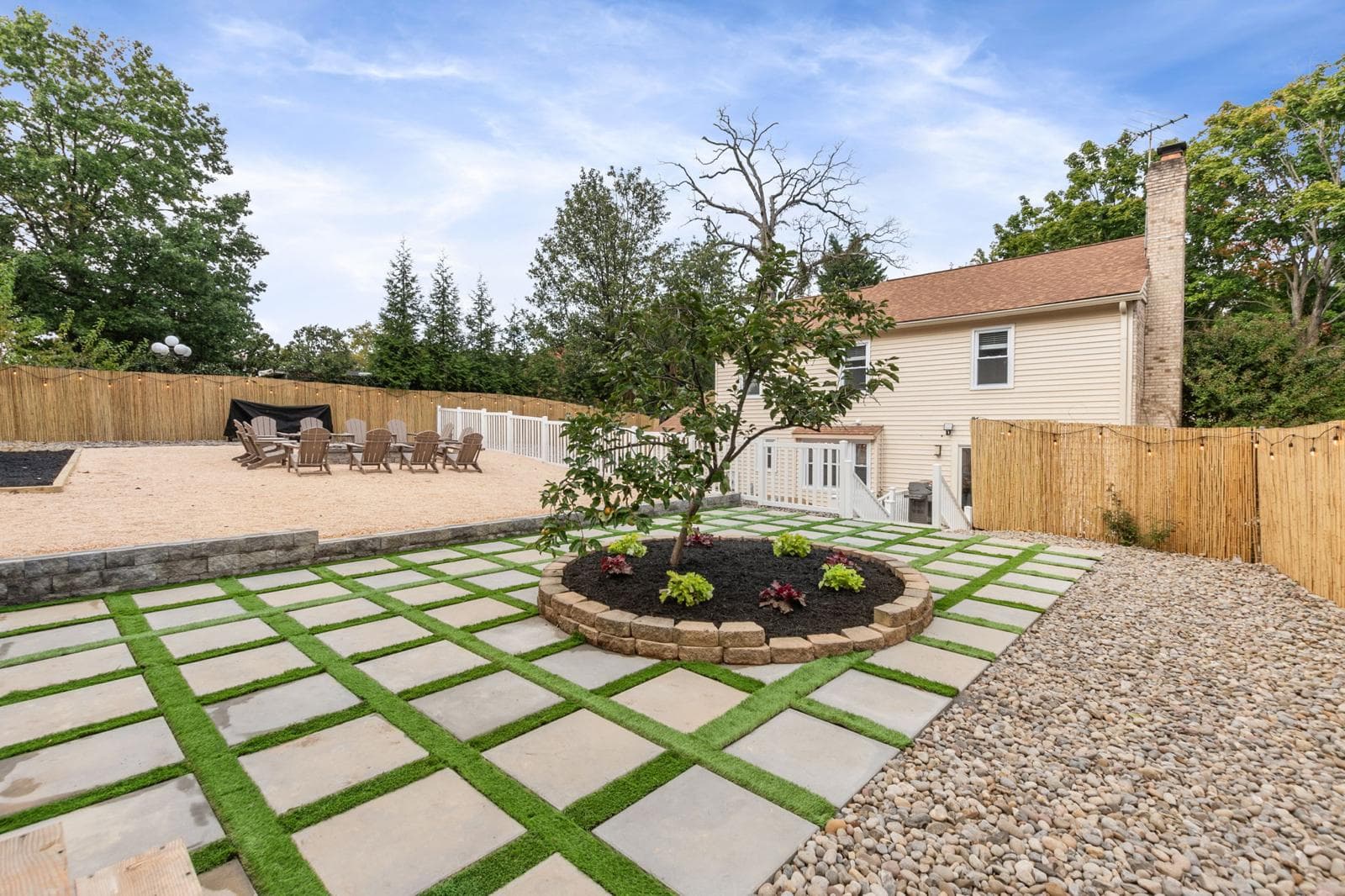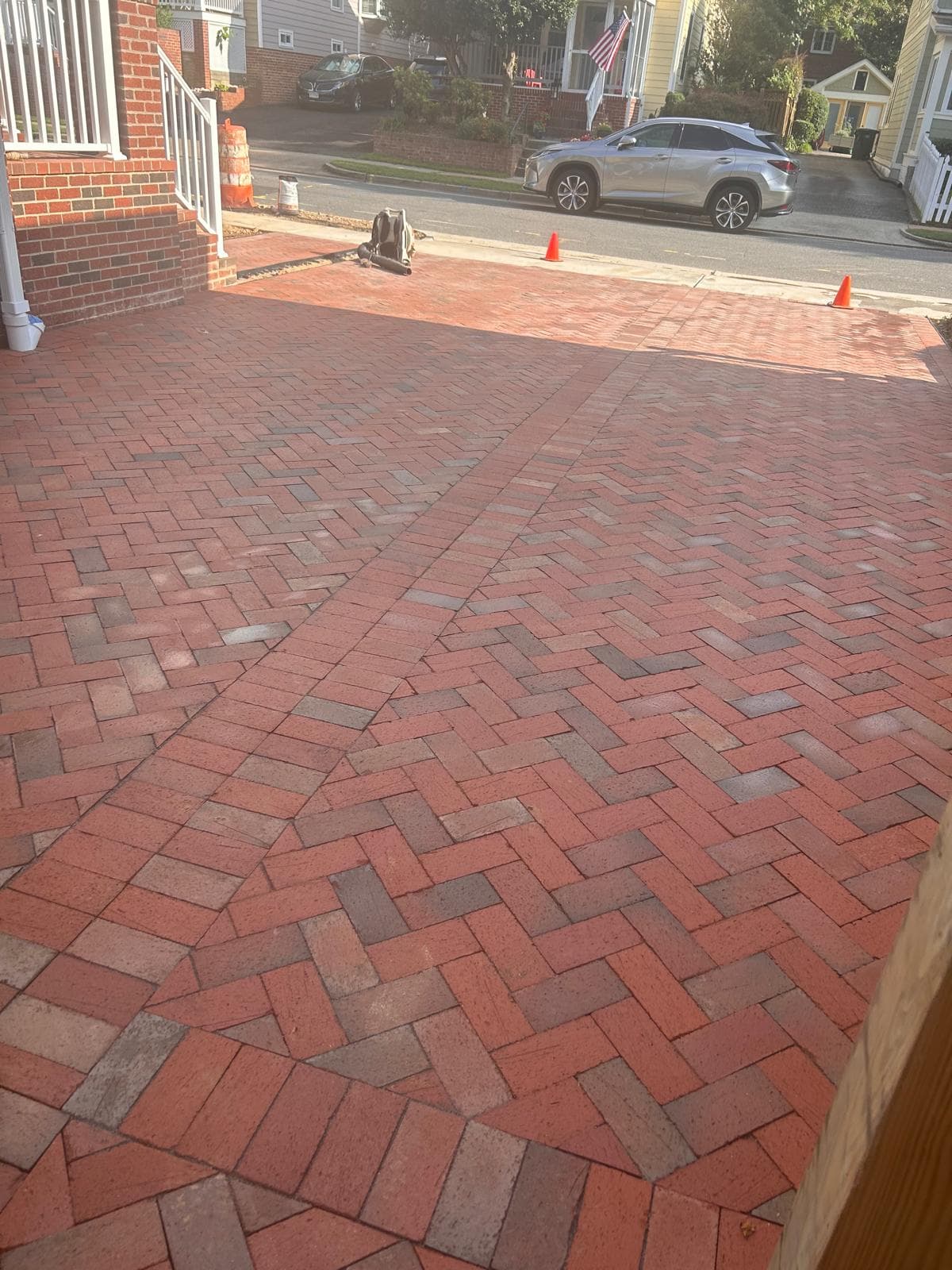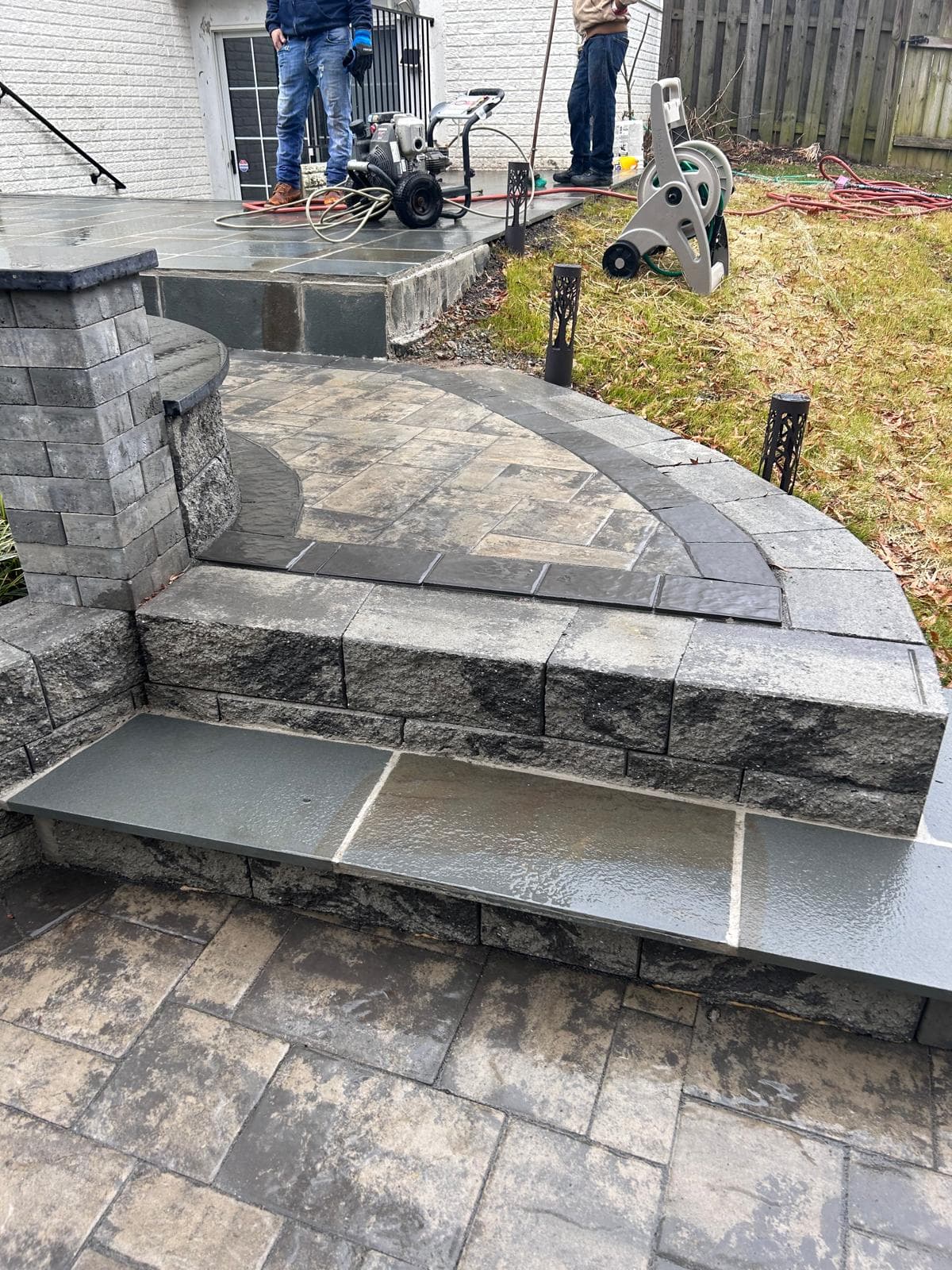
The most common question we get during a Kaeler patio site visit is not "how much will it cost" — it is "how long will my yard be torn up?" The answer depends more on the steps a contractor refuses to skip than on the size of the patio. Here is the day-by-day breakdown of a real 2026 Northern Virginia paver patio install — start to finish.
The short answer: 2026 paver patio timeline in NoVA
| Patio size | Working days on site | Calendar weeks (start to keys-in-hand) |
|---|---|---|
| Small, 200 sq ft | 3 – 5 days | 1 – 2 weeks from break-ground |
| Medium, 400 sq ft | 5 – 8 days | 1.5 – 2.5 weeks |
| Large, 600 sq ft | 8 – 12 days | 2 – 3.5 weeks |
| Estate, 900+ sq ft | 12 – 20 days | 3 – 6 weeks |
Add 3–6 weeks of pre-build time for site visit, written estimate, contract signing, permit pull, and material ordering. Total elapsed time from first call to finished patio: typically 6 to 10 weeks in 2026.
Day-by-day breakdown for a 400 sq ft patio in Fairfax County
The most common Kaeler install is a 400 sq ft pavers patio on a moderately graded suburban lot in Fairfax, Burke, or Springfield. Here is what each day looks like.
Day 1 — Site prep and layout
- Mark utilities (call before you dig — Virginia 811 required, 2 business days lead time)
- Lay out patio footprint with stakes and string
- Confirm grade and slope direction (typically 1/8 inch per foot away from the house)
- Mobilize equipment: mini-excavator, plate compactor, materials staging
Day 2 — Excavation
- Excavate 8–10 inches deep across the entire patio footprint
- Haul off excavated soil (typical 400 sq ft patio = 8–12 cubic yards of dirt)
- Hand-dig where the excavator cannot reach (against the house, around trees)
- Install drainage tie-in if applicable (most NoVA clay-bound yards need one)
Day 3 — Base prep
- Install geotextile fabric over the compacted subgrade
- Deliver and spread 4 inches of crushed VDOT #57 stone
- Compact the first lift with a plate compactor
- Spread and compact a second 2-inch lift of crushed stone
Day 4 — Bedding and edging
- Install the second base lift if a deeper base is required (typical for sloped or clay-heavy lots)
- Spread 1 inch of clean concrete sand (bedding layer)
- Screed the bedding sand level using rails
- Install edge restraint anchored into the compacted base
Day 5 — Paver laying
- Begin paver installation from the longest straight edge
- Lay pavers tight, maintaining pattern (running bond, herringbone, or pattern selected)
- Cut edge pavers with a wet saw to fit borders and curves
- For 400 sq ft, most of the field is laid in a single day
Day 6 — Final cuts, polymeric sand, and cleanup
- Complete any remaining edge cuts and detail work
- Sweep polymeric joint sand into the joints
- Compact pavers with plate compactor and protective pad
- Water-activate the polymeric sand
- Final cleanup, debris removal, walkthrough with the homeowner
Days 7–8 — Curing and 24-hour rest
- Polymeric sand cures fully in 24–48 hours
- Patio is walkable immediately but should not have furniture placed for 24 hours after the water-activation
What slows a NoVA patio install down
The published 5–8 day timeline assumes a clean site, straightforward access, and no unexpected conditions. Here are the most common slowdowns:
| Cause | Typical delay added |
|---|---|
| Old concrete slab to demo | 1 – 3 days |
| Tree-root excavation | 1 – 2 days |
| Heavy clay requiring deeper base | 1 – 2 days |
| Slope correction beyond 1/8" per foot | 1 – 3 days |
| Drainage tie-in to county storm sewer | 1 – 2 days (plus permit time) |
| Rain delay (NoVA spring/summer common) | 1 – 4 days |
| Tight side-yard access (wheelbarrow material) | 1 – 3 days |
| Permit-required attached patio review | 1 – 4 weeks (pre-build) |
| HOA approval (Burke Centre, Reston, Fairfax Station) | 2 – 6 weeks (pre-build) |
The single biggest delay we see is rain plus clay soil. Once NoVA clay gets saturated, it cannot be compacted properly until it dries — typically 24–48 hours of dry weather, longer in spring.
What speeds an install up
- Open rear access (driveway to backyard). Trucks can dump material directly into the work area instead of wheelbarrowing — saves 1–3 days on most jobs.
- Decisions made before break-ground. Material selected, pattern chosen, edge style locked, lighting plan agreed. Mid-job changes add 1–4 days easily.
- No drainage issues. Lots with natural slope and no clay pockets skip the drainage tie-in step.
- No demolition needed. Greenfield installs run faster than replace-an-old-slab installs.
- One contractor handling everything. Our crew handles excavation, base, paver, and polymeric sand in one continuous sequence. Multi-vendor jobs (one company excavates, another lays pavers) add 3–7 days for handoffs.
For more on when scheduling matters, see our piece on the best time of year for patio installation in Northern Virginia.
Pre-build timeline (from first call to break-ground)
| Step | Typical duration |
|---|---|
| First call → site visit booked | 1 – 5 business days |
| Site visit and measure | 45 – 75 minutes on-site |
| Written estimate returned | 1 – 3 business days |
| Contract review and signing | 3 – 10 business days (homeowner pace) |
| Permit application (if required) | 1 – 4 weeks |
| HOA architectural review (if applicable) | 2 – 6 weeks |
| Material ordering and delivery | 1 – 3 weeks |
| Slot in the build calendar | 2 – 8 weeks depending on season |
For a March-April call, expect a typical break-ground in late April or early May. For a June call, expect break-ground in late July or August. For a July call wanting a fall install, the date locks in early September. See our piece on booking fall hardscaping in July for why this timing matters.
What "completion" actually means
A patio is "complete" on the last day of the crew on site. But there are two short follow-ups built into the standard Kaeler scope:
- 24-hour cure. Polymeric joint sand needs 24 hours to cure fully before heavy furniture goes on the patio.
- 30-day check-in. We come back at the 30-day mark to inspect joints after the first rain event, top up any settling, and confirm drainage performance.
Frequently asked questions
Can a paver patio be installed in one day?
No. The minimum credible timeline for a properly installed paver patio is 3 days — and that is only for very small (under 150 sq ft), flat, accessible sites with no drainage tie-in. Anything done in a single day is skipping base depth, compaction lifts, or polymeric sand.
How long does it take to break ground after I sign?
In peak season (April–October) in NoVA, expect 2–8 weeks from contract signing to break-ground. We schedule one project at a time per crew, so the wait reflects the queue ahead of you, not preparation time.
Can I walk on the patio the day it's finished?
Yes for foot traffic — pavers are stable immediately after the final compaction pass. Hold off on heavy furniture and patio sets for 24 hours after polymeric sand water-activation.
How long does a paver patio last after install?
A properly base-built and polymeric-sealed paver patio in NoVA lasts 25–40 years. See our deeper piece on paver patio cost and lifespan in Northern Virginia for the full breakdown.
What if it rains during my install?
The crew pulls off site once the soil is saturated and cannot be compacted. Day-of cleanup and tarp staging take an hour. We resume the next dry day. Most NoVA installs absorb 1–2 rain days in spring and summer.
Does winter install take longer than summer?
Yes. Cold-weather installs (October through mid-December) are 1–3 days slower because polymeric sand needs warmer temperatures to cure and because base compaction is slower in cold soil. Once the ground freezes, install pauses until spring.
Ready to scope your install?
If you want a real timeline for your specific lot — including any pre-build review and permit time — book a free patio site visit. We will walk the property, confirm scope, and lock a slot on the build calendar.
We install patios across Springfield, Burke, Fairfax, McLean, Vienna, and the rest of the 18 NoVA cities we serve. See all areas we serve.