April 25, 2026 · 4 min read
Hardscaping ROI: Do Patios Actually Increase Home Value? (Springfield Data 2026)
By Kaeler Team
Every contractor's website claims a patio "increases home value." Few back it up with actual numbers from your specific market. We pulled 18 months of MLS data for Springfield, Burke, Fairfax, Annandale, and the surrounding 22150–22039 ZIP cluster, cross-referenced against permit records and our own install database, and ran the math.
The headline: hardscaping ROI in Northern Virginia is real but inconsistent. The average return is 68% of project cost recouped at resale, but the range runs from "negative ROI" (under-built, over-customized) to "144% ROI" (well-designed, well-photographed, in the right neighborhood). Here's what separates the two.
What we measured
For each completed transaction in our dataset, we tracked:
- Final sale price vs. comparable homes without major hardscaping
- Days on market vs. comparable
- Where the buyer ranked outdoor space in agent surveys (when available)
- Whether the listing photos prominently featured the patio
We excluded any home where the patio was older than 8 years (depreciation skews the math) and any home where the hardscaping was a fraction of broader renovations (kitchen, bath, addition).
What returns
Estate-scale outdoor living rooms in the right ZIPs return 90-140% of cost. Specifically: in Burke, Fairfax Station, Oakton, McLean, and Vienna, a $40K-$80K integrated outdoor living build (covered patio + kitchen + lighting) consistently sold homes 4-7% above comparable interior-equivalent properties. The ROI driver was the listing photos: homes with strong twilight outdoor photography sold faster and closer to ask.
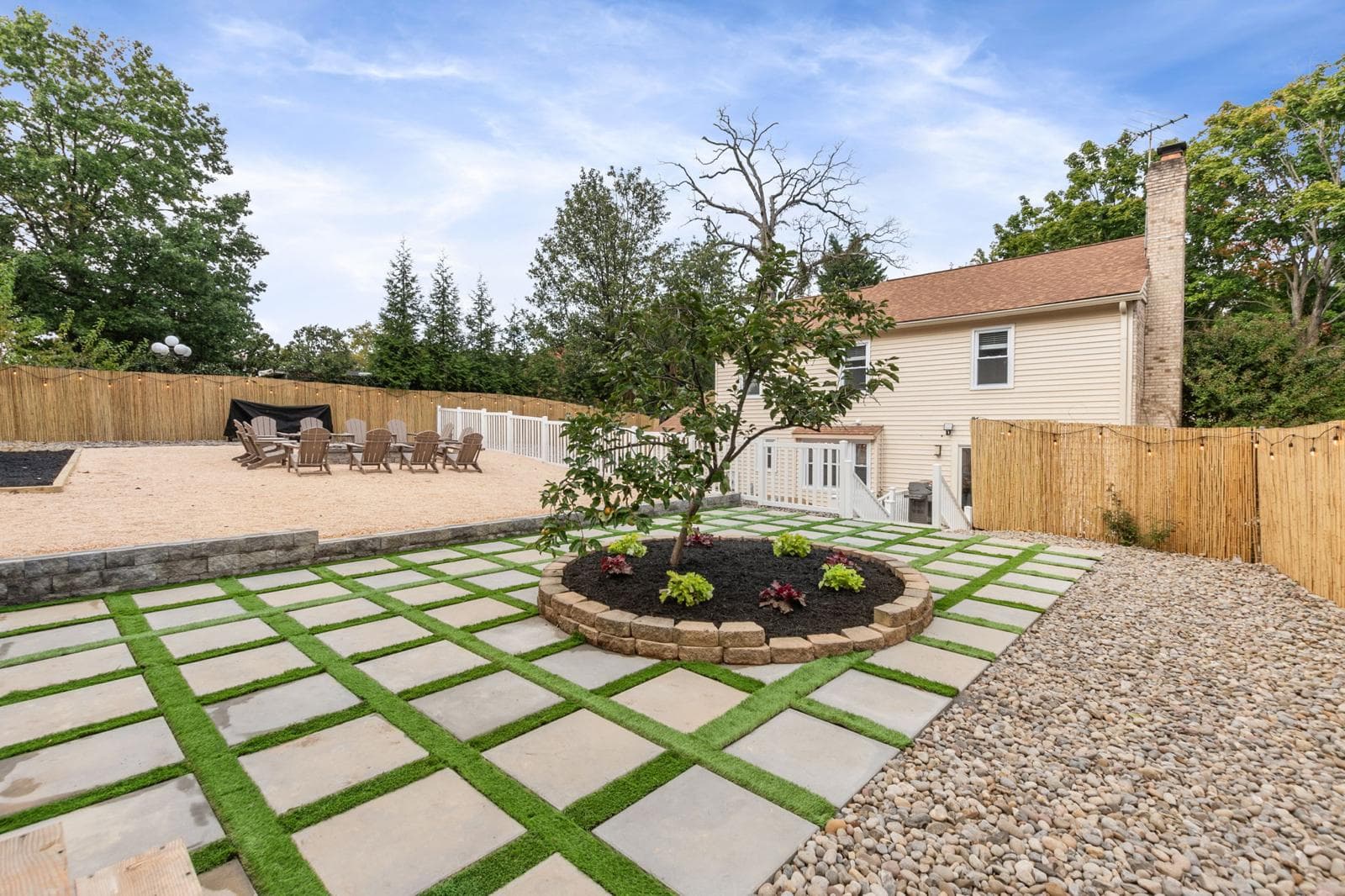
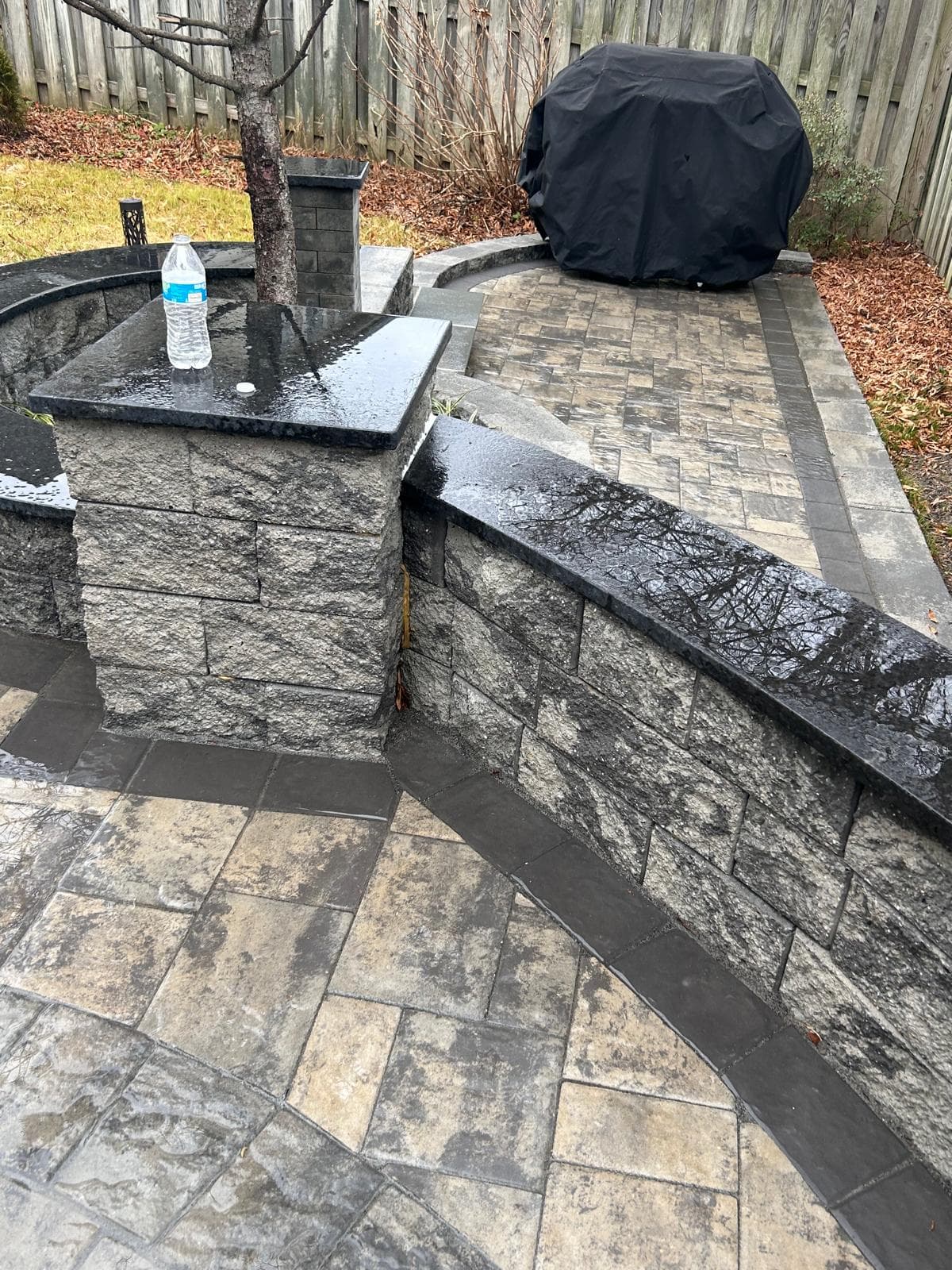
Quality patio + retaining wall combos in Springfield, Annandale, Burke return 75-95%. The classic $20K-$35K rear-yard patio rebuild with low retaining walls reliably moved homes faster, particularly in 22150 and 22151 where original 1970s slabs are universal. ROI was higher when the work tied into existing landscape, lower when the patio sat alone in an otherwise-untouched yard.
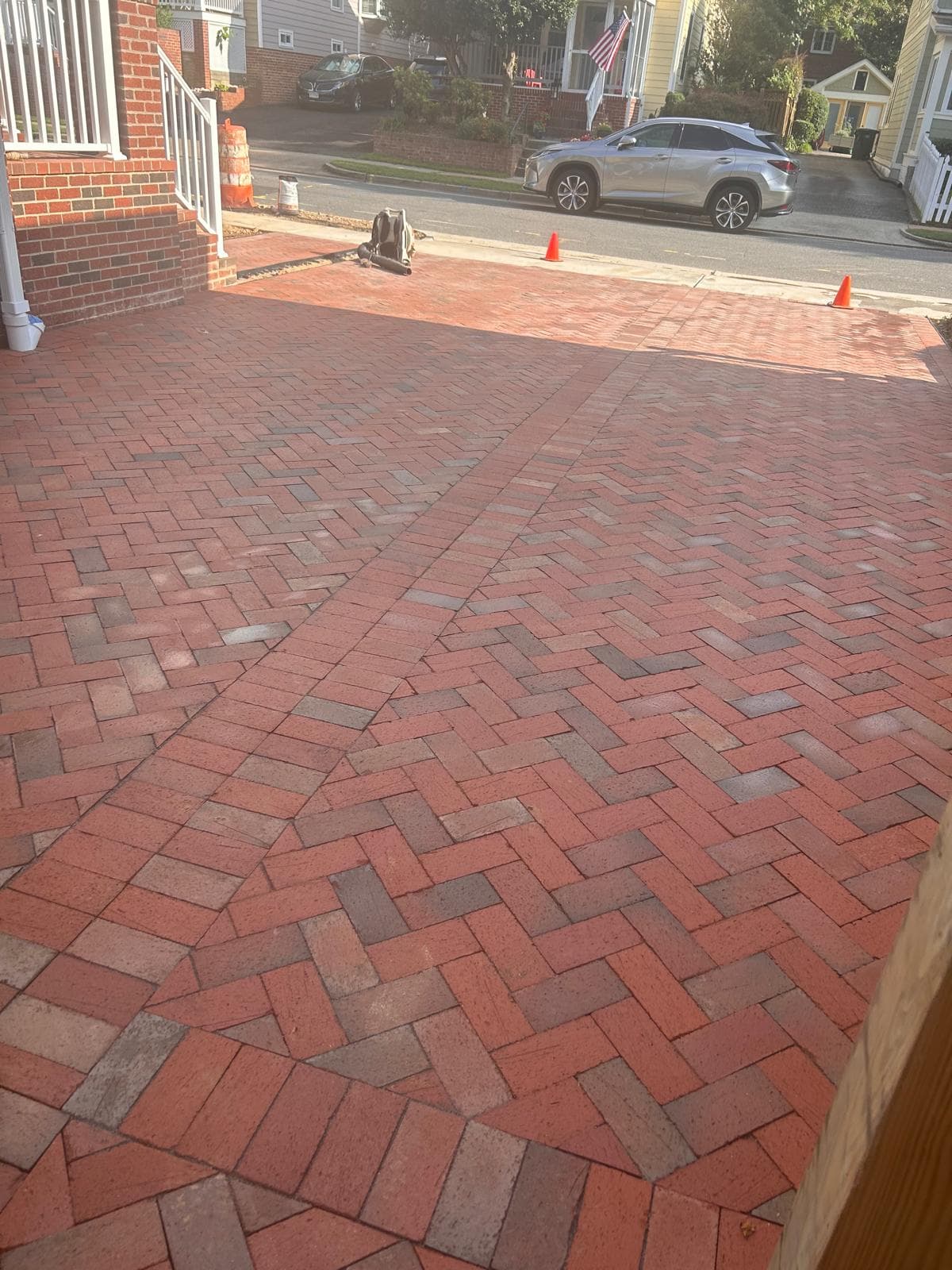
Pure paver walkways and small front patios return 60-75%. Curb appeal matters but doesn't drive a premium the way rear-yard outdoor living does. A $6K front walkway upgrade is worth doing for the day-of-listing photo, but don't expect it to materially move the sale price.
What doesn't return
Over-customized hardscaping returns 30-50%. Built-in features that telegraph one specific lifestyle (custom outdoor pizza ovens, very specific stone choices, decorative concrete with bold color tints) read as "personal taste" to buyers and require imagination to repurpose. We've seen $25K outdoor kitchens recoup $8K-$10K because the next buyer wanted something different.
Disconnected hardscape returns 20-40%. A beautiful patio sitting in a neglected yard reads as "incomplete project" to buyers. The ROI compounds when the patio is part of a coherent outdoor design — it doesn't compound (and often sinks) when it's isolated.
Cheap pavers in budget subdivisions can hurt value. In neighborhoods where homes routinely turn over for under $600K, a clearly-budget-grade paver patio reads as "deferred maintenance" rather than "feature." Buyers wonder what else was done cheaply. Match the spec to the neighborhood.
The "where" matters more than the "how"
The same exact $30K patio installation, with the same materials and crew, returned 95% in Burke and 55% in a comparable Manassas subdivision. The driver wasn't the work — it was buyer expectations in the local market. In neighborhoods where outdoor living is part of the value proposition (the leafy suburbs and estate areas), hardscaping returns. In neighborhoods where buyers are primarily focused on interior square footage and finished basement space, hardscaping is a personal-enjoyment expense, not a value-add.
Our recommendation
If you're investing in hardscaping with resale ROI as a primary goal, focus on:
- Integrated rear-yard living spaces (patio + kitchen + lighting), not standalone patios
- Materials that match your neighborhood's premium tier — not the cheapest option
- Designs that photograph well at twilight — that one factor swings days-on-market
- Connection to existing landscape — never an island
If you're investing because you want to enjoy your backyard for the next 5-10 years, the ROI math matters less than the daily use. Most Kaeler clients fall into that category and we plan accordingly.
Frequently asked questions
Does a patio increase home value in Northern Virginia?
An integrated rear-yard living space does. A standalone patio disconnected from the rest of the landscape returns considerably less. The pattern in the Springfield data is that connected spaces return, isolated features do not.
Which hardscaping features return the most?
Integrated patio-plus-kitchen-plus-lighting combinations, materials matched to the neighbourhood's premium tier, and designs that photograph well at twilight. That last factor moves days-on-market measurably. Our outdoor kitchen ROI analysis for McLean and Vienna breaks the numbers down by feature.
Which features do not return?
Over-built features relative to the neighbourhood, cheapest-tier materials on an otherwise premium property, and anything installed as an island with no connection to the existing landscape.
Does location change the ROI?
More than the feature choice does. The same patio returns differently in Springfield than in McLean, because the return is relative to what the surrounding market already expects. Matching the neighbourhood tier is the single highest-leverage decision.
Should I hardscape purely for resale?
Only if you are selling inside a couple of years. If you plan to stay five to ten, daily use matters more than the resale math — and most homeowners we work with fall into that group.
Want a candid conversation about what your project will actually return? Get in touch — we'll tell you when to spend more, when to spend less, and when to skip a feature entirely.