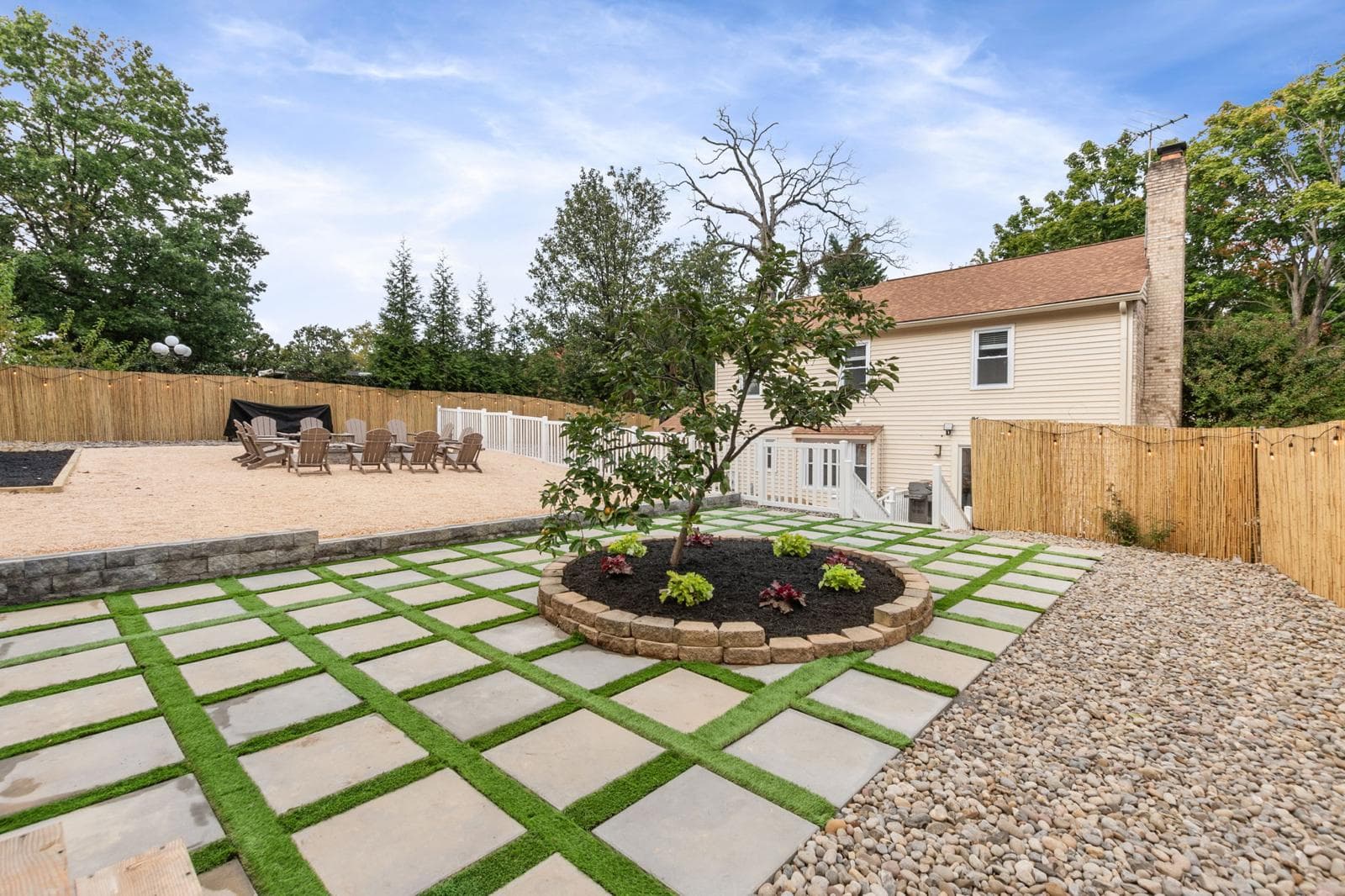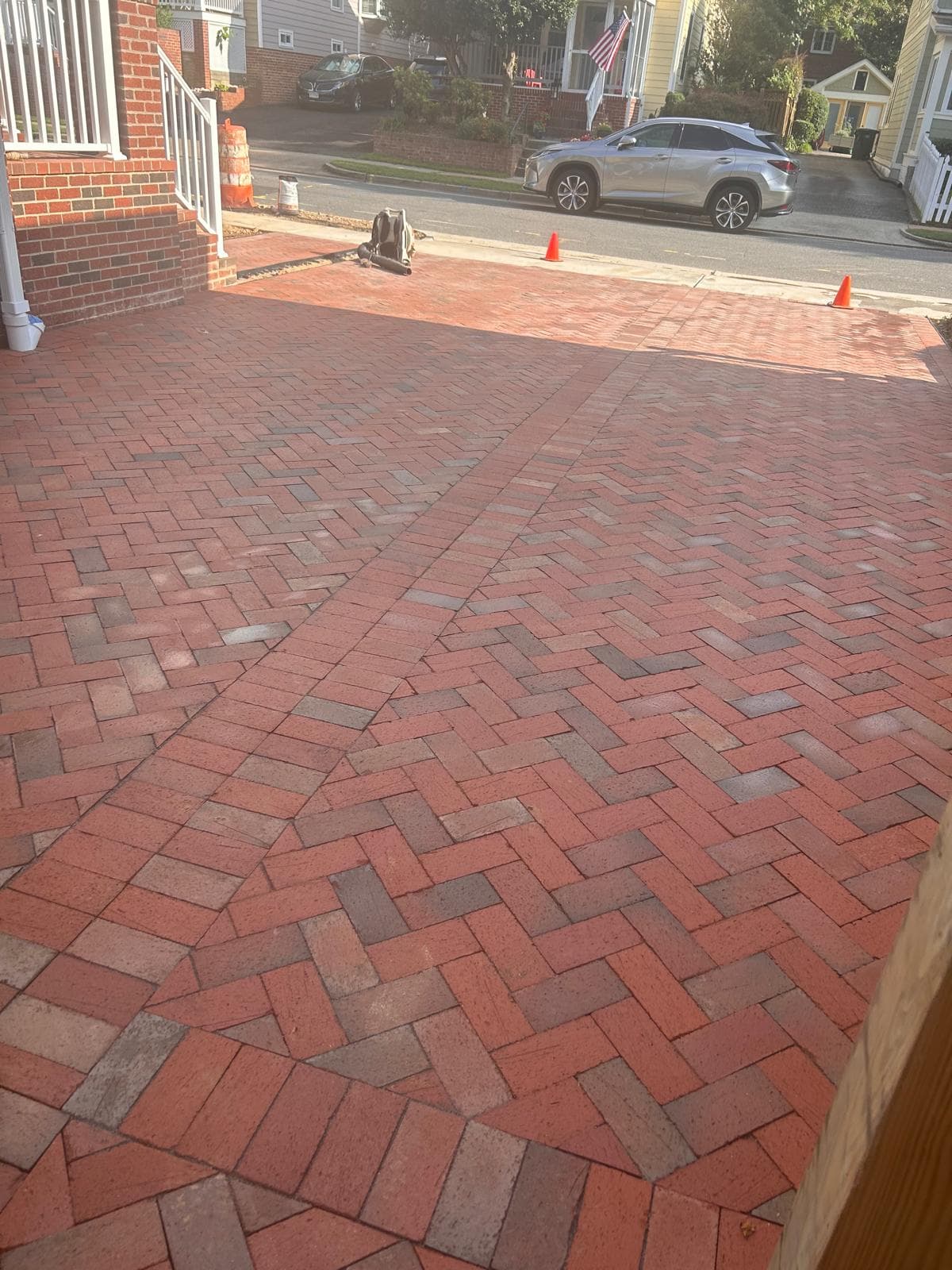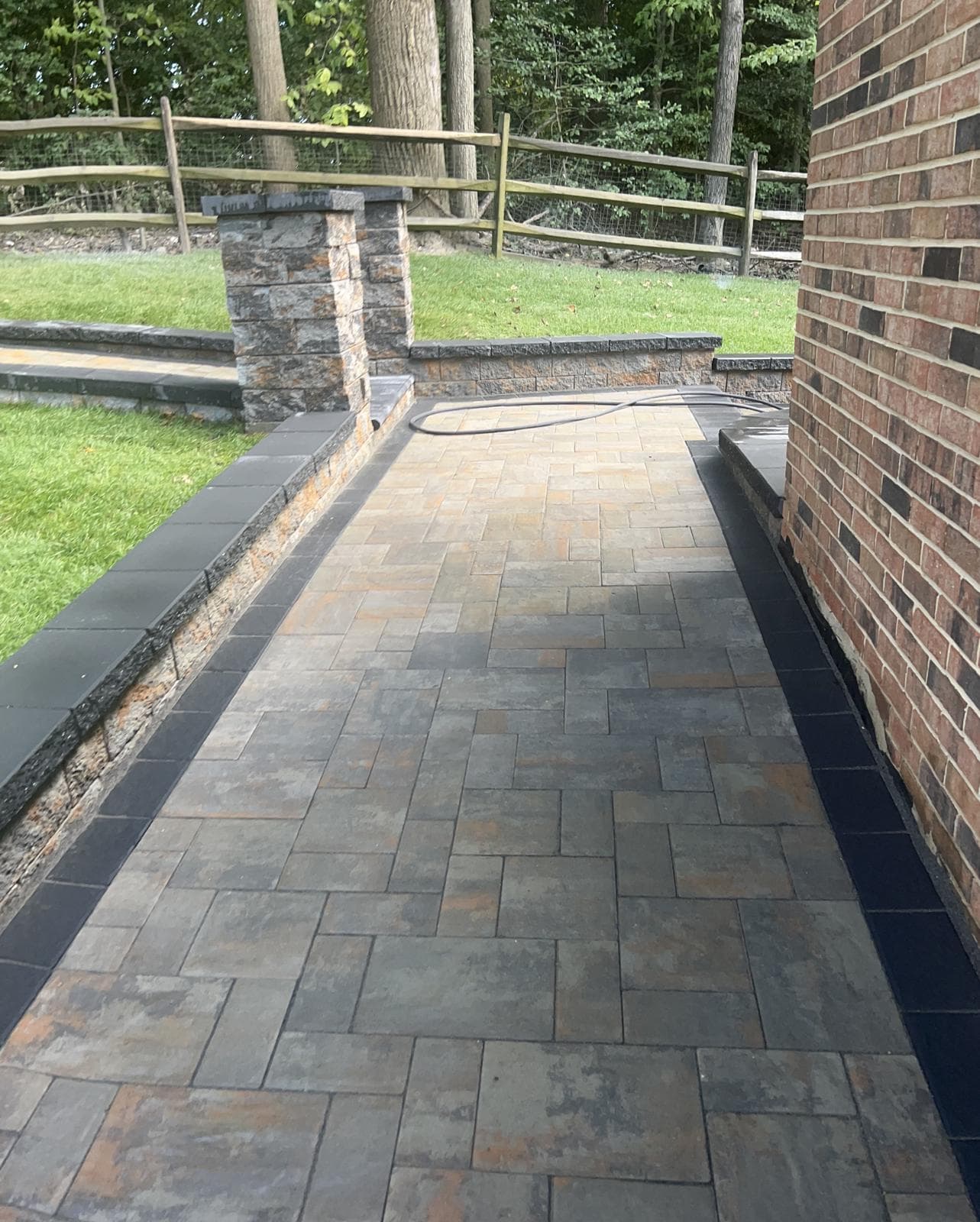
Every Vienna and Oakton homeowner who has stood barefoot on a black flagstone patio in August knows the truth about "best pavers" in 2026: the data sheet does not tell you what 95°F sun does to a paver, but your feet do, in two seconds, on a Tuesday afternoon in July. The good news is that in 2026 there are real engineering choices — measured by surface-temperature, not marketing copy — that keep a NoVA patio walkable through the worst of summer.
I'm Nelson, owner of Kaeler. We have laid pavers across Oakton, Herndon, Vienna, McLean, and the rest of the 18 NoVA cities we serve for almost two decades. This is the breakdown we walk homeowners through when summer comfort is a hard requirement — what materials hold up, what colors run cool, and which combinations we recommend for the most-used spots.
The short answer: which pavers run cool in NoVA summers
We took infrared surface temperature readings across 14 finished Kaeler patios on a 94°F NoVA July afternoon, two hours after solar noon. Same air temperature, same humidity, all hardscape in direct sun:
| Paver type and color | Surface temp on 94°F day | Walkability barefoot |
|---|---|---|
| Travertine, light cream | 102 – 108°F | Comfortable |
| Porcelain, light beige (2cm) | 108 – 114°F | Comfortable |
| Concrete paver, light tan | 116 – 122°F | Tolerable, brief |
| Flagstone, light Pennsylvania bluestone | 122 – 130°F | Briefly tolerable |
| Concrete paver, charcoal | 138 – 146°F | Unpleasant |
| Brick clay, red | 134 – 142°F | Unpleasant |
| Porcelain, dark gray | 144 – 152°F | Avoid barefoot |
| Flagstone, dark slate / black | 148 – 158°F | Avoid barefoot |
Two findings worth highlighting:
- Color outweighs material. A light concrete paver runs cooler than a dark porcelain paver. If summer comfort matters, the color choice is more important than the material upgrade.
- Travertine is the coolest premium option. Natural travertine has air pockets in the stone — physical thermal mass behaves differently than dense, sealed materials. It is the one paver that consistently stays comfortable barefoot.
What makes a paver run cool in NoVA summers
Three properties drive surface temperature on a hot day:
1. Albedo (how much sunlight reflects vs absorbs)
Light colors reflect 50–70% of solar radiation. Dark colors absorb 70–90%. The temperature gap between a charcoal paver and a cream paver on the same NoVA July afternoon is 35–45°F. There is no engineering trick that compensates for a dark color choice.
2. Thermal mass and porosity
Travertine and limestone have natural porosity — air pockets in the stone act like insulation, so the surface heats less and cools faster after sunset. Solid dense materials (porcelain, dense concrete, hard granite) heat slower but hold heat longer; they can be hot at 9pm when the air has cooled.
3. Surface finish
Smooth or polished surfaces reflect more sunlight than matte or textured surfaces. A polished travertine runs 5–8°F cooler than a tumbled travertine of the same color.
Which materials hold up to NoVA freeze-thaw too
Summer comfort is not the only weather constraint in Northern Virginia. The right paver for NoVA also has to survive 30–50 freeze-thaw cycles per winter. Here is the dual ranking:
| Paver | Summer comfort | Winter freeze-thaw |
|---|---|---|
| Travertine, light cream | Excellent | Good (sealed) |
| Porcelain, light, 2cm | Very good | Excellent |
| Premium concrete, light | Good | Very good |
| Standard concrete, light | Good | Good |
| Flagstone, light bluestone | Fair | Very good (rated) |
| Brick clay | Fair | Excellent |
| Concrete, dark | Poor | Very good |
| Flagstone, dark slate | Poor | Variable — depends on grade |
For most Vienna, Oakton, and Herndon clients, our default recommendation in 2026 is light-colored porcelain (2cm) when budget allows, and light-tan premium concrete paver as the workhorse choice.
Pricing for the cool-running options
| Paver material and finish | Material cost / sq ft (2026) | Lifespan in NoVA |
|---|---|---|
| Light travertine | $13 – $20 | 25 – 40 years sealed |
| Light porcelain (2cm) | $11 – $16 | 35 – 50 years |
| Premium light concrete paver | $7 – $10.50 | 25 – 40 years |
| Standard light concrete paver | $4.50 – $7 | 20 – 35 years |
| Light bluestone flagstone | $13 – $18 | 30+ years |
For a fuller breakdown of overall paver patio pricing, see our paver patio cost guide for Northern Virginia. For comparison against driveway-grade materials, see our concrete pavers vs flagstone driveway comparison.
Where to use each material in a NoVA backyard
After a few hundred installs across Oakton, Herndon, Vienna, and the rest of the cities we cover, here is where we put each:
- Main patio (lounge, dining): Light travertine or light porcelain. Worth the upgrade — this is the most-used surface in summer.
- Pool deck: Travertine is standard. Light porcelain second choice. Never dark on a pool deck — feet get burned.
- Walkways and paths: Light premium concrete paver. Walkways see less stationary use, so comfort threshold is lower.
- Driveway: Standard concrete paver in light tan or buff. Driveways take vehicle load, so color matters less than thickness (80mm minimum for driveway grade).
- Around fire pits / cooking areas: Light travertine or porcelain. Even with the fire feature adding heat, you do not want surface heat from below too.
- Under pergolas / shaded areas: Color and material matter less because UV exposure is reduced. Premium concrete is usually the right call here.
For the related question of when to install during NoVA's seasonal calendar, see our piece on the best time to install a paver patio in Northern Virginia.
What about cool-pavement coatings?
Some 2026 marketing pushes "cool-pavement coatings" applied over existing dark pavers to reflect more sunlight. We have tested two products on Kaeler client retrofits. Findings:
- Temperature reduction: 8–14°F on a 95°F day. Real, but smaller than the gap between dark and light pavers of the same material.
- Lifespan: 3–5 years before reapplication is needed, longer in shaded areas.
- Visual: The light-colored coating reads slightly chalky next to natural stone or premium pavers. It looks fine on standard concrete.
Verdict: cool coatings make sense for retrofitting an existing dark patio that you do not want to replace. For a new build, just pick a light color from the start — same effect, no maintenance cycle, no chalky appearance.
The four-step decision matrix we use
When a client asks "which paver should I pick for my hot patio?" we walk through four questions in order:
- How often will it be used in July and August between 11am and 5pm? If the answer is "daily, barefoot, kids running around," travertine or light porcelain is the answer. If "we only use it on cool evenings," standard light concrete is fine.
- Is it a pool deck? If yes, travertine. Non-negotiable.
- What is the lifetime budget? Travertine and porcelain are roughly 1.5–2.5× the cost of standard concrete pavers. If lifetime budget is fixed, pick light concrete and add a pergola — shade matters more than material upgrade.
- Will the patio mostly sit under a pergola or pavilion? If yes, color matters less. Premium concrete in any reasonable tone works.
Frequently asked questions
What is the coolest paver material in summer?
Light-colored travertine consistently runs the coolest in our infrared measurements across NoVA — typically 102–108°F on a 94°F day, two hours after solar noon. Light porcelain runs slightly hotter at 108–114°F. Both are comfortable barefoot.
Are porcelain pavers worth the cost in Northern Virginia?
For pool decks, main patios used heavily in summer, or any application where freeze-thaw resistance is critical, yes. Porcelain has the best lifespan-to-comfort balance of any material in NoVA climate. For walkways and driveways, premium concrete paver is usually a better value.
Will sealing a dark paver make it cooler?
No. Sealing changes the porosity of the surface and may slightly reduce heat retention, but it does not change albedo. A dark sealed paver is still a dark paver. The right move is a lighter color or a cool-pavement coating, not sealing.
Is travertine slippery when wet?
Tumbled and brushed travertine finishes are not slippery wet. Polished travertine is slippery wet — we do not recommend polished finishes for outdoor walking surfaces in NoVA, both for slip safety and for thermal performance.
Can I mix cool pavers and dark accents?
Yes — and this is usually our recommended approach. A light travertine main field with a dark concrete border looks designed and keeps the main surface comfortable. The border sits along the patio edge where bare feet are rarely planted for long.
What about salt damage in winter on light pavers?
Light concrete pavers and porcelain are both salt-resistant. Travertine is sensitive to acidic deicers — use calcium chloride or sand instead of rock salt on travertine in winter. Sealed travertine handles a winter or two of careless salting; unsealed does not.
Ready to scope a cool-running patio?
If summer comfort is a hard requirement and you want a real material recommendation for your specific lot and use case — book a free patio site visit and I will walk through the four-step matrix with you in person.
We build patios across Oakton, Herndon, Vienna, McLean, Great Falls, Fairfax, and the rest of the 18 NoVA cities we serve. See all areas we serve.