The hard truth about Fairfax County yards: most of the plants sold at big-box garden centers are not adapted to your conditions. They're sold because they look good in a 1-gallon container, not because they survive year three in NoVA's clay soil, partial canopy shade, deer pressure, and hot/humid summers. The result is a landscape that needs constant replacement — expensive, frustrating, and bad for the long-term health of your soil.
After 20 years of installing plants in Springfield, Burke, Vienna, Reston, and across the broader Fairfax service area, we've narrowed down a working palette of natives and well-adapted ornamentals that actually survive. Here's what works, organized by use case.
For shaded yards (most of Fairfax County)
Most NoVA yards have at least partial canopy shade from oaks, tulip poplars, and dogwoods. The plants that thrive in dappled shade with clay soil:
- Christmas fern (Polystichum acrostichoides) — evergreen, deer-resistant, spreads slowly into a beautiful groundcover.
- Foamflower (Tiarella cordifolia) — spring blooms, tolerates root competition from trees.
- Heuchera (native varieties like 'Carnival') — colorful foliage year-round, deer mostly leave it alone.
- Wild ginger (Asarum canadense) — slow but rewarding groundcover for the deepest shade.
- Solomon's seal (Polygonatum biflorum) — graceful arching stems, naturalizes in shade gardens.
Avoid: hostas. Yes, they're ubiquitous. Yes, the deer eat them. Don't fight it.
For sunny edges
Where you do have full sun (driveway edges, south-facing front beds, rear lawn perimeters), the durable performers:
- Black-eyed Susan (Rudbeckia fulgida) — long bloom, self-seeds politely, indestructible.
- Coneflower (Echinacea purpurea) — long-lived, deer-resistant when established, attracts pollinators.
- Switchgrass (Panicum virgatum 'Shenandoah') — winter interest, native, low water.
- Little bluestem (Schizachyrium scoparium) — turns burgundy in fall, native prairie grass.
- Bee balm (Monarda fistulosa) — pollinator magnet, mildew-resistant native cultivars.
For wet spots
NoVA's clay creates persistent wet spots that frustrate most landscaping. The plants that actually want to live there:
- Inkberry holly (Ilex glabra) — evergreen, shade-tolerant, handles clay and water.
- Joe-Pye weed (Eutrochium maculatum) — tall back-of-border drama, butterflies.
- Cardinal flower (Lobelia cardinalis) — vivid red, hummingbirds, short-lived but reseeds.
- Royal fern (Osmunda regalis) — large architectural fern for damp shade.
For deer pressure
In Reston, Great Falls, Vienna, and most of NoVA, deer pressure is significant. Plants the deer mostly ignore:
- All ferns (Christmas, royal, lady)
- Lavender (well-drained sun only)
- Russian sage
- Bee balm (the strong fragrance deters them)
- Iris (bearded and Siberian both)
- Ornamental grasses
- Boxwood (the only "tolerated" shrub, though young growth gets nibbled)
Plants the deer reliably destroy in NoVA: hostas, daylilies, tulips, most rose varieties, arborvitae (heavy winter browse damage).
What we don't recommend
- Bradford pears. Already banned in some VA counties for invasive spread.
- Burning bush. Invasive in our region, displaces natives.
- English ivy. Smothers trees, near-impossible to remove once established.
- Most azalea hybrids without acidic-soil amendment — our soil is naturally too neutral and they struggle.
A note on lawn
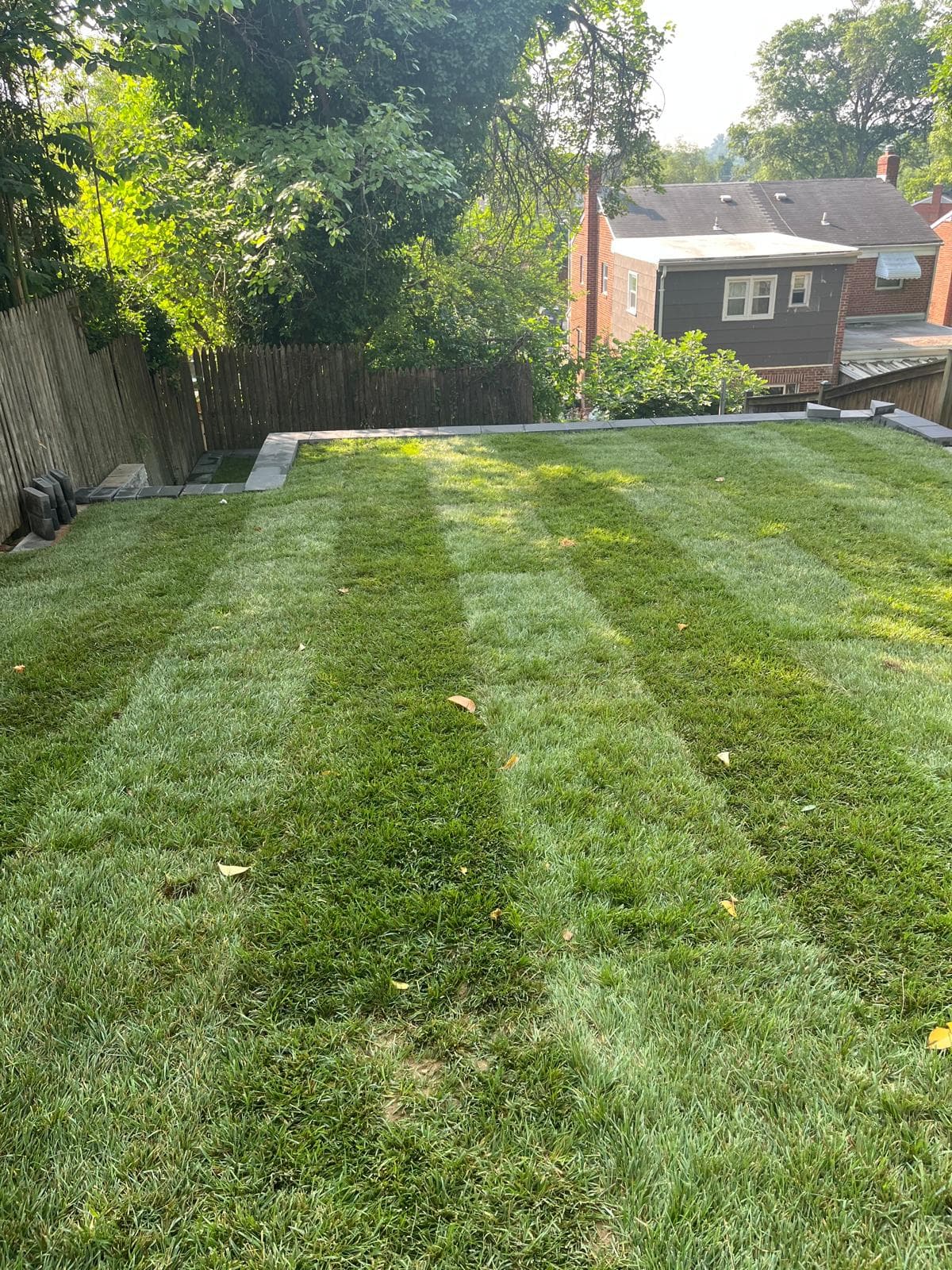
Real talk: traditional Kentucky bluegrass lawn struggles in NoVA. The ones that work are tall fescue blends with a 10-15% perennial ryegrass mix for fast germination, overseeded every fall to maintain density. We test soil pH on every install and amend as needed (most NoVA soils benefit from light lime application).
How we install
Our planting installs include: amended planting holes (compost mixed 30/70 with native soil), root-ball roughing for container plants to prevent girdling, 3-inch shredded hardwood mulch (NOT dyed, NOT volcano-mulched), and a 12-month establishment period with our care guidance. We also flag every plant with a small ID tag the first season so you remember what's where during the first winter dieback.
Frequently asked questions
Why plant natives in Fairfax County?
They are adapted to our acidic clay and our rainfall pattern, so once established they need far less water and no fertilizer program. They also support local pollinators and birds in a way that ornamental exotics do not.
When is the best time to plant natives in NoVA?
Fall, generally September through early November. Soil is still warm enough for root growth while air temperatures have dropped, which lets a plant establish before it faces its first summer. Spring planting works but requires much more irrigation through the first season.
What grows in the deep shade most Fairfax yards have?
Shade is the dominant condition here, and the native palette for it is genuinely good — the shade section above covers the species we plant most. The mistake is trying to force sun-loving ornamentals into it and then treating the resulting decline as a soil problem.
Do native plants stop deer damage?
They reduce it but do not eliminate it. Deer pressure in Fairfax County is heavy enough that plant selection matters more than any repellent, which is why the deer-pressure section above exists as its own list.
Does native planting replace a lawn?
It can, partly. Tall fescue blends still handle high-traffic areas better than anything native, but converting the edges and shaded zones to native beds reduces both the mowing footprint and the input cost. Our spring lawn care checklist covers what the remaining turf needs.
Want a real planting plan for your Fairfax County yard, designed for what actually grows here? Get in touch and we'll come walk the property.